
For many UK drivers, maintaining independence behind the wheel is crucial. When physical limitations arise, adaptations like a steering wheel spinner knob can be transformative. However, navigating the regulations around these aids can be complex. This guide clarifies whether a driving assessment is required to use a steering wheel knob in the UK, details the role of Driving Mobility centres, distinguishes between voluntary and mandatory assessments, and explains the process for UK motorists.
Understanding Steering Wheel Spinner Knobs
A steering wheel spinner knob, also known as a steering aid, attaches to the steering wheel rim, enabling one-handed control. These adaptations are particularly beneficial for individuals with conditions that affect grip strength, arm movement, or coordination, including arthritis, limb loss, and neurological conditions such as stroke or multiple sclerosis [1]. They facilitate smoother manoeuvres and reduce physical strain, enhancing driving safety and comfort.
Who Benefits from a Steering Wheel Knob?
- Limb Loss: Individuals with upper limb amputation or partial hand loss.
- Neurological Conditions: Drivers affected by stroke (hemiplegia), multiple sclerosis, cerebral palsy, Parkinson’s disease, motor neurone disease, or spinal cord injury.
- Musculoskeletal Conditions: Those with osteoarthritis, rheumatoid arthritis, shoulder injuries, or severe Repetitive Strain Injury (RSI).
- Temporary Injuries: Drivers recovering from arm fractures, post-surgery immobilisation, or tendon repair.
Any condition impairing a driver’s ability to safely operate a standard steering wheel may necessitate a steering aid, subject to professional assessment [1].
The Role of Driving Mobility Centres
Driving Mobility is a registered charity overseeing a national network of driving assessment centres across the UK. These centres are vital for evaluating a driver’s fitness to drive with adaptations and providing expert recommendations [2].
What is Driving Mobility?
Driving Mobility centres are staffed by multidisciplinary teams, including occupational therapists, approved driving instructors (ADIs), and rehabilitation engineers. These professionals assess physical and cognitive abilities, advise on suitable vehicle adaptation options, and ensure accessibility for most UK residents [2].
The Assessment Process Explained
A typical driving assessment at a Driving Mobility centre lasts between 1.5 to 3 hours and comprises several key stages [1]:
- Clinical Assessment (Indoors): An occupational therapist evaluates upper and lower limb function, grip strength, range of motion, reaction time, visual acuity, and cognitive abilities. This stage identifies specific challenges and potential solutions.
- Vehicle and Equipment Assessment: Drivers are introduced to various steering aids and other adaptations. The assessor helps determine the most appropriate devices, such as spinner knobs (ball, T-bar, tri-pin) or other hand controls, to ensure optimal control and comfort.
- On-Road Driving Assessment: This practical component involves driving a specially adapted vehicle on public roads under the supervision of an ADI. The driver’s ability to control the vehicle, maintain road positioning, manage speed, and react to traffic situations using the recommended adaptations is evaluated.
- Report and Recommendations: A detailed report is issued confirming fitness to drive with adaptations, specifying recommended aids (e.g., “steering wheel spinner knob, ball type, fitted at 10 o’clock position, with automatic transmission”), and may suggest further actions such as refresher lessons or future reassessments [1].
When is a Driving Assessment Required?
The necessity of a driving assessment for a steering wheel knob in the UK depends on individual circumstances and DVLA involvement.
Mandatory Assessments
An assessment becomes mandatory primarily when the DVLA requests it. This usually occurs after a driver notifies the DVLA of a medical condition that could affect their driving ability. The DVLA’s primary concern is road safety, and an assessment helps determine if a driver can safely operate a vehicle with or without adaptations [1].
If the DVLA issues a driving licence with specific condition codes (e.g., Code 40 for modified steering), it legally mandates the use of the specified adaptation. Driving without the required adaptation is an offence, equivalent to driving without a valid licence [1].
Voluntary Assessments
Even if not mandated by the DVLA, a voluntary driving assessment is highly recommended for anyone considering a steering wheel knob due to a medical condition or physical limitation. This proactive step ensures the chosen adaptation is suitable, safe, and correctly fitted. It also provides peace of mind and professional validation of driving fitness [1].
Many individuals self-refer to Driving Mobility centres for expert advice, to try different adaptations, and to receive a professional report that can be invaluable for insurance purposes or future interactions with the DVLA.
Notifying the DVLA and Licence Codes
It is a legal obligation for drivers to inform the DVLA about any medical condition that could affect their ability to drive safely [3]. This includes conditions necessitating a steering wheel knob.
The Notification Process
Drivers can notify the DVLA online via GOV.UK or by post using the relevant medical forms. The DVLA will then review the information and may [3]:
- Confirm the licence remains unchanged.
- Request further medical information from a GP or specialist.
- Request a driving assessment at a Driving Mobility centre.
- Issue a licence with specific condition codes.
- Revoke the licence if driving is deemed unsafe.
Notifying the DVLA does not automatically lead to licence revocation; in most cases, the licence is confirmed or issued with appropriate condition codes [1].
Relevant DVLA Licence Codes
For steering wheel knobs, Code 40 (Modified Steering) is most relevant. If a driving assessment recommends a spinner knob as a required adaptation, this code will appear on the driver’s licence. Code 78 (Restricted to Automatic Transmission) is often paired with Code 40 for drivers needing to keep one hand on the spinner knob, making manual gear changes impractical [1].
| Code | Meaning |
|---|---|
| 40 | Modified steering |
| 78 | Restricted to automatic transmission |
Insurance and MOT Considerations
Using a steering wheel knob has implications for vehicle insurance and MOT testing.
Insurance Declaration
Drivers must declare any vehicle modifications, including steering wheel knobs, to their insurance provider. It is crucial to mention if the adaptation is prescribed following a professional driving assessment, as this influences how insurers view the modification. Providing the assessment report and DVLA licence codes can help ensure appropriate cover [1].
Under the Equality Act 2010, insurers cannot refuse cover or unfairly increase premiums solely because of a disability or a prescribed adaptation, unless justified by relevant actuarial data [4].
MOT Testing
Adapted vehicles undergo standard MOT testing. A steering wheel knob itself is not a specific MOT inspection item and will not cause a failure. However, the vehicle should be presented for its MOT with all prescribed adaptations fitted, as it would be in normal use. MOT testers are generally familiar with common adaptations [1].
Conclusion
While purchasing a steering wheel knob in the UK does not require a prescription, the question of whether a driving assessment is needed is critical for safety and legal compliance. For drivers with medical conditions that affect their ability to steer, a professional driving assessment at a Driving Mobility centre is highly recommended and often mandated by the DVLA. This process ensures that the correct adaptations are identified, fitted, and that the driver can operate their vehicle safely and legally on UK roads. By understanding the assessment process, DVLA regulations, and the support available, UK motorists can confidently maintain their driving independence.
Shop UK steering wheel knobs
Clamp-on spinner knobs that fit steering wheel rims about 28–40mm thick. No drilling, removable in minutes.
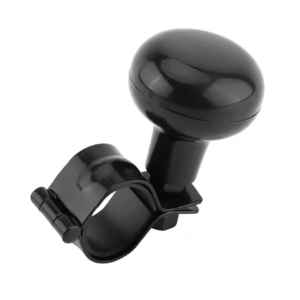
Steering Wheel Ball Spinner Knob – Black
The classic all-black steering ball with a smooth ball-bearing spin.
£14.99
View knob →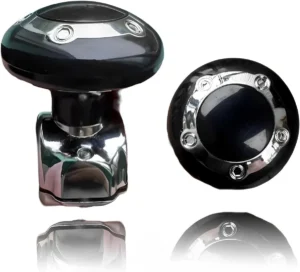
Chrome Steering Wheel Spinner Knob
Chrome-trimmed spinner knob with a metal clamp, in black or silver.
£14.99
View knob →✓ Free UK Royal Mail delivery · ✓ Dispatched within 3 working days · ✓ 14-day returns · ✓ 1-year warranty
References
[1] Steering Wheel Spinner Knobs for Disabled Drivers in the UK (Complete 2026 Guide). steeringwheelknob.co.uk. https://steeringwheelknob.co.uk/steering-wheel-spinner-knobs-for-disabled-drivers-in-the-uk-complete-2026-guide/
[2] Driving Mobility. drivingmobility.org.uk. https://www.drivingmobility.org.uk
[3] Tell DVLA about a medical condition. GOV.UK. https://www.gov.uk/report-driving-medical-condition
[4] Equality Act 2010. legislation.gov.uk. https://www.legislation.gov.uk/ukpga/2010/15/contents
