
For many disabled drivers across the United Kingdom, maintaining independence behind the wheel is paramount. Steering wheel knobs, often referred to as spinner knobs or steering aids, can be a transformative adaptation, offering enhanced control and reduced physical effort. However, understanding their legality, how they integrate with UK disability benefits, and the necessary procedures is crucial. This comprehensive guide aims to provide UK drivers with the essential information needed to navigate the world of steering wheel knobs and the support available.
Understanding Steering Wheel Knobs (Spinner Knobs)
Steering wheel knobs are devices that attach securely to the rim of a steering wheel, providing a single point of contact for drivers. They are designed to allow one-handed steering, making it significantly easier to turn the wheel, especially during low-speed manoeuvres such as parking or navigating tight spaces. This adaptation is particularly beneficial for individuals with:
- Limited hand or arm mobility
- Reduced grip strength
- The need to operate secondary controls (e.g., hand controls for acceleration and braking) with their other hand
By reducing the physical exertion required to steer, these knobs can alleviate fatigue and improve overall driving comfort and safety for disabled drivers.
Legality of Steering Wheel Knobs in the UK
The legality of steering wheel knobs in the UK is a common concern for drivers. Contrary to some misconceptions, these devices are generally legal, particularly when used as a genuine driving aid for disabled individuals. However, their use is subject to certain conditions and considerations:
- DVLA Regulations: The Driver and Vehicle Licensing Agency (DVLA) does not explicitly ban steering wheel knobs. Instead, they are considered a vehicle adaptation. If a medical condition necessitates the use of such an aid, it is crucial to inform the DVLA. While informing the DVLA of a medical condition is mandatory, the use of a steering wheel knob itself does not automatically lead to a licence revocation. The DVLA’s primary concern is ensuring that drivers are medically fit to drive safely.
- Road Traffic Act: The overarching principle of the Road Traffic Act is that a vehicle must be driven safely and under proper control. A steering wheel knob, when properly installed and used by a driver who benefits from it, should enhance control rather than impede it. Improper installation or use by an able-bodied driver without a genuine need could potentially be viewed as compromising control.
- Insurance Considerations: It is imperative to inform your insurance provider about any vehicle modifications, including the installation of a steering wheel knob. Failure to do so could invalidate your insurance policy. Most insurers are accustomed to such adaptations for disabled drivers and will adjust policies accordingly.
- Professional Installation and Assessment: For safety and legality, steering wheel knobs should be professionally installed. Furthermore, a driving assessment by a qualified professional (often through a Driving Mobility Centre) can determine if a steering wheel knob is the most appropriate aid for your specific needs and ensure you can use it safely and effectively.
Navigating Disability Benefits for Vehicle Adaptations
Disabled drivers in the UK can access various schemes and benefits to help cover the costs of vehicle adaptations, including steering wheel knobs. Understanding these can significantly ease the financial burden.
The Motability Scheme
The Motability Scheme is a leading car lease scheme for disabled people in the UK, enabling them to exchange their mobility allowance to lease a new car, a Wheelchair Accessible Vehicle (WAV), a scooter, or a powered wheelchair. Steering wheel knobs are among the many adaptations available through the scheme.
- Eligibility: To be eligible, you must receive one of the following mobility allowances:
- Enhanced Rate of the Mobility Component of Personal Independence Payment (PIP)
- Higher Rate Mobility Component of Disability Living Allowance (DLA)
- Armed Forces Independence Payment (AFIP)
- War Pensioners’ Mobility Supplement (WPMS)
- Adaptations: Many standard adaptations, including basic steering wheel knobs, are often fitted at no extra cost. For more complex or bespoke adaptations, financial assistance may be available through the Motability Foundation.
Personal Independence Payment (PIP) and the Mobility Component
Personal Independence Payment (PIP) helps with the extra costs of a long-term health condition or disability. The mobility component of PIP is particularly relevant for drivers.
- Eligibility: The mobility component is awarded based on how your condition affects your ability to get around. There are two rates: standard and enhanced. Receiving the enhanced rate of the mobility component is a key criterion for accessing the Motability Scheme.
- Assistance with Driving Costs: While PIP does not directly fund vehicle adaptations, the mobility component can contribute to the overall costs of running a vehicle, which in turn can free up funds for necessary adaptations such as steering wheel knobs.
Access to Work Scheme
Access to Work is a government scheme that provides grants to help people with disabilities or health conditions start or stay in work. This can include funding for vehicle adaptations if they are essential for work-related travel.
- Purpose: The scheme aims to remove barriers to employment. If a steering wheel knob is required to enable you to drive to work or as part of your job, Access to Work may cover the cost.
- Eligibility: You must be in paid employment (or about to start) and have a disability or health condition that affects your ability to do your job or get to and from work.
VAT Exemption on Disability Aids
Many products designed specifically for disabled people are eligible for VAT exemption, meaning you do not have to pay the 20% Value Added Tax. This can include steering wheel knobs and their installation.
- What Qualifies: To qualify, the item must be designed solely for use by disabled people, or be a modification to a vehicle for a disabled person’s use. The individual must also be ‘chronically sick or disabled’.
- How to Claim: Suppliers of disability aids should be able to process VAT exemption at the point of sale. You will typically need to complete a simple declaration form confirming your eligibility.
Important Considerations for UK Drivers
Beyond understanding the benefits, several practical steps ensure a smooth and safe experience with steering wheel knobs:
- Professional Assessment: Always seek a professional driving assessment. This ensures the adaptation is suitable for your specific needs and that you can operate it safely.
- Notifying Authorities: Inform the DVLA about your medical condition and any significant vehicle adaptations. Also, notify your insurance company to ensure your policy remains valid.
- Maintenance and Safety: Ensure the steering wheel knob is regularly checked for security and proper functioning. A loose or faulty knob could be dangerous.
Shop UK steering wheel knobs
Clamp-on spinner knobs that fit steering wheel rims about 28–40mm thick. No drilling, removable in minutes.
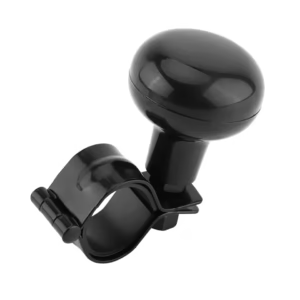
Steering Wheel Ball Spinner Knob – Black
The classic all-black steering ball with a smooth ball-bearing spin.
£14.99
View knob →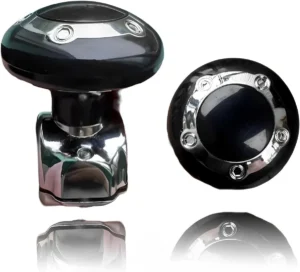
Chrome Steering Wheel Spinner Knob
Chrome-trimmed spinner knob with a metal clamp, in black or silver.
£14.99
View knob →✓ Free UK Royal Mail delivery · ✓ Dispatched within 3 working days · ✓ 14-day returns · ✓ 1-year warranty
Frequently Asked Questions
Can I get a steering wheel knob through Motability?
Motability Scheme customers can ask for adaptations, including steering aids, when they lease a car through the Scheme. What is available, and whether there is a cost, depends on the adaptation, so check with Motability before you order.
Do disabled drivers pay VAT on a steering wheel knob?
VAT relief is available on some products designed or adapted for disabled people and bought for their own personal use. Whether a particular steering aid qualifies depends on the product and the circumstances, so check the GOV.UK VAT relief guidance before you claim.
Conclusion
Steering wheel knobs offer a valuable solution for many disabled drivers in the UK, enhancing control, comfort, and independence. While generally legal, it is vital to adhere to DVLA guidelines, inform your insurer, and ideally undergo a professional assessment. Furthermore, the Motability Scheme, PIP mobility component, Access to Work, and VAT exemption provide significant financial support for these essential adaptations. By understanding and utilising these resources, UK drivers can confidently and safely navigate the roads, maintaining their freedom and mobility. Always seek professional advice from driving assessment centres and adaptation specialists to ensure the best solution for your individual circumstances.
