A steering wheel spinner knob only needs a few minutes of attention every now and then — but almost nobody gives it any. Check the clamp for tightness roughly once a month, wipe dust and grit from around the bearing now and again, add a light lubricant if it starts to squeak or feel gritty, and replace the knob if tightening no longer fixes the play. That’s the whole job.
Most modern clamp-on knobs — like our Premium Ball Spinner Knob – Black and the Chrome Spinner Knob – Black / Silver — are deliberately simple: a clamp with screws, a grip, and a spinning bearing between them. Most problems owners report turn out to be one loose screw.
The two-minute monthly check
Vibration is the enemy of any bolted clamp. Owners of spinner knobs on tractors, trucks and cars report the same thing again and again: the knob is rock solid after fitting, then gradually works loose over weeks or months of driving, until one day it twists on the wheel — or worse, comes off in the hand mid-manoeuvre. One long-term user only discovered the cause after assuming his knob had worn out: a single internal screw had backed out, and tightening it made the knob feel brand new.
So make a small habit of it: grip the knob and try to rotate the clamp on the wheel (it shouldn’t move at all), spin the knob on its bearing (it should turn smoothly and silently, with no wobble or rattle), and look at the clamp screws — if any have backed out visibly, tighten them now.
A quick check when you’re waiting in the car or filling up with fuel is plenty. If you fitted your knob yourself using our step-by-step fitting guide, you already know which screws to look at.
Re-tightening the clamp the right way
If the knob has loosened, re-tightening is usually all it needs:
- Tighten the clamp screws firmly but don’t force them. You want the clamp immovable on the rim, not strained. Overtightening can crack the clamp or chew into a leather wheel.
- Check the rubber pad. Most clamp knobs ship with a rubber pad or insert that sits between the clamp and the wheel rim — it protects the wheel’s finish and gives the clamp extra grip. Make sure it’s still in place and hasn’t slipped out of position: a missing or misplaced pad is a common reason for a clamp that keeps loosening.
- Tighten both screws evenly (if your clamp has two). Tightening one side fully before the other can twist the clamp slightly, which makes it more likely to work loose again.
If you find yourself re-tightening every few weeks, a small drop of thread-locking compound on the screw threads can keep them from vibrating loose — mechanics use it on exactly this kind of problem. It’s inexpensive and available at any motor factors shop.
Squeaks and gritty spinning: cleaning and lubricating the bearing
A knob that spins should do it quietly. If yours develops a squeak, a dry rasp, or a gritty feel when you turn it, the bearing between the grip and the mount is almost certainly dry or dusty — especially if the car has been sitting in heat, or dust has worked its way in.
Here’s the fix owners and mechanics alike recommend:
- Clean first. Wipe around the base of the spinning grip with a damp cloth to remove loose dust and grit. Work the grip through a few turns while you wipe — you’ll feel whether there’s gritty resistance.
- Use a penetrating spray as a diagnostic, not a fix. A quick blast of penetrating oil will usually silence a squeak for a few days, confirming the noise was coming from the bearing — but it evaporates quickly, so the squeak comes back.
- Apply a proper lubricant for the lasting fix. For a dry bearing, a light application of silicone lubricant or white lithium grease is the standard recommendation from owner discussions, and both last far longer than penetrating oil. A small amount is enough: work it into the seam where the grip meets the mount and turn the grip a few times to spread it.
- Wipe off the excess. You don’t want lubricant migrating onto the wheel rim or your hands.
Don’t use heavy grease or anything that will attract more dirt — the goal is a clean, lightly lubricated bearing, not a paste of oil and road dust.
Reading the symptoms: what’s actually wrong
Not every problem means the same thing. Use this quick guide:
- Clamp slides or twists on the wheel → screws have loosened, or the rubber pad has shifted. Re-tighten and reposition the pad.
- Squeak or whine when spinning the grip → dry bearing. Clean and lubricate as above.
- Gritty, crunching feel → grit in the bearing. Clean thoroughly first; if it still crunches afterwards, the bearing surface is likely worn.
- Rattle or side-to-side play in the grip itself → wear in the bearing or mount. If re-tightening the clamp doesn’t cure it, this is wear, not looseness.
- Grip pops off its mount → the attachment between grip and mount has failed or worn through. This one isn’t a tightening job.
One important check: make sure the problem is actually the knob and not your car’s steering. A squeak that happens when you turn the steering wheel itself — with or without the knob — is a car problem, not a knob problem, and needs a mechanic’s attention.
When to replace rather than repair
Spinner knobs are inexpensive parts, and there comes a point where repair stops being sensible:
- The bearing still feels rough or grinds after cleaning and proper lubrication. A worn bearing surface doesn’t recover, and a gritty knob will only get worse.
- The grip has persistent side-to-side play that no amount of tightening fixes. Once the mounting points have worn, the knob will keep developing play.
- Any crack in the clamp, grip or mount. Plastic and composite parts fatigue over time. A cracked clamp can’t hold reliably, so don’t try to nurse it along — replace it.
- It has come off the wheel while driving more than once. A knob that repeatedly detaches is telling you the clamp no longer fits properly. One slip during fitting is a fitting problem; repeated slips are a worn-part problem.
If in doubt, replace. A fresh knob is cheap insurance, and re-fitting one takes minutes with our step-by-step fitting guide.
Practical takeaways
- Check clamp tightness monthly. Vibration backs screws out over time — it’s the single most common issue.
- Keep the rubber pad in place. It’s the clamp’s grip on your wheel.
- Clean the bearing area occasionally; lubricate with silicone spray or white lithium grease, not penetrating oil alone. Penetrating sprays evaporate and the squeak returns.
- Match the symptom to the fix: sliding clamp = tighten; squeak = clean and lubricate; persistent play or grinding = wear.
- Replace on cracks, worn bearings or repeat detachments. If in doubt, replace.
Looking after the knob is also part of keeping it safe to use. For the wider picture — positioning, when not to use it, and the myths around spinner knobs — see our myths vs facts safety guide.
Shop UK steering wheel knobs
Clamp-on spinner knobs that fit steering wheel rims about 28–40mm thick. No drilling, removable in minutes.
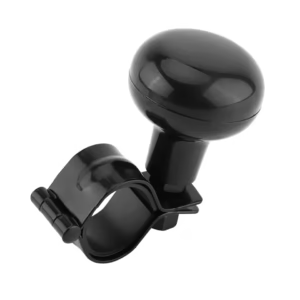
Steering Wheel Ball Spinner Knob – Black
The classic all-black steering ball with a smooth ball-bearing spin.
£14.99
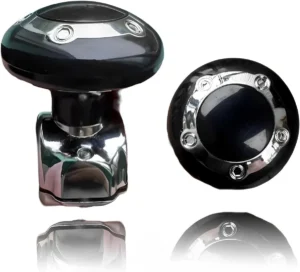
Chrome Steering Wheel Spinner Knob
Chrome-trimmed spinner knob with a metal clamp, in black or silver.
£14.99
✓ Free UK Royal Mail delivery · ✓ Dispatched within 3 working days · ✓ 14-day returns · ✓ 1-year warranty
FAQ
How often should I tighten my steering wheel knob?
Check it roughly once a month and tighten as needed. If you find it’s loosening faster than that, check the rubber pad is seated correctly, tighten both clamp screws evenly, and consider a drop of thread-locking compound on the threads.
Why does my knob squeak?
Almost always a dry or dusty bearing. Clean around the base of the grip, then apply a small amount of silicone lubricant or white lithium grease, working the grip through a few turns. Penetrating sprays only quiet it temporarily.
Is a loose knob dangerous?
A knob that slides or comes off while you’re steering is a distraction and a loss of control at the worst moment, so treat looseness as a fix-now job. A quick tighten usually resolves it; if it keeps coming loose, the clamp or knob likely needs replacing.
How long should a steering wheel knob last?
It depends on use and conditions, but a well-made knob with a decent bearing should give years of service with occasional tightening and lubrication. What kills them is neglect: months of vibration loosening the clamp, or grit grinding away a dry bearing. The two-minute monthly check above is the difference.
Can I just use WD-40 on the bearing?
You can use it to confirm the squeak is coming from the bearing, but don’t rely on it as the fix — it evaporates within days. Follow up with silicone lubricant or white lithium grease for a lasting result.
