A broken arm, a sling, or fresh surgery can take you off the road for weeks. The short answer: once your doctor and insurer agree you are fit to drive, a steering wheel spinner knob can make one-handed steering easier during recovery. But it does not make driving while injured legal or safe on its own — talk to your doctor and your insurer before you get behind the wheel.
The honest position first: a knob is an aid, not a licence
UK guidance is consistent: it is the driver’s responsibility to be fit to drive and in full control of the vehicle at all times. NHS hospital leaflets on driving after injury advise waiting until your fracture clinic or follow-up appointment before driving with a suspected fracture, and asking your insurer directly whether your injury affects your cover — an injury can invalidate motor insurance. If your injury means you cannot keep proper control, you risk committing an offence, and driving against medical advice can give your insurer grounds to refuse a claim. So the non-negotiable step is: get explicit clearance from your doctor and tell your insurer about the injury before you drive.
When should you not be driving at all?
A knob only helps with steering. You should not drive if:
- Your doctor, surgeon or fracture clinic has told you not to. Their advice wins over everything else here.
- You are still in a plaster cast, splint or sling. NHS guidance advises against driving while immobilised — a cast reduces movement and grip, and a sling pins your arm to your body.
- Your medication affects you. Strong painkillers can slow reactions, cloud judgement and cause drowsiness. Rule 96 of the Highway Code says you must not drive under the influence of drugs or medicine. Check with your doctor or pharmacist, and do not drive if there is any doubt.
- You are in significant pain or sleeping badly. Pain weakens grip and strength; poor sleep affects coordination.
- You cannot do an emergency stop safely. The practical test from NHS leaflets: in your own car, engine off, can you turn the wheel fully both ways and stamp the brake hard without hesitation or sharp pain? If not, you are not ready.
If any of those apply, the knob stays in the box. This is a guide for the recovery phase, not the acute phase.
When a knob can genuinely help
Once immobilisation is over and you have medical clearance, many people find they are fit to drive but not yet at full strength — the joint is stiff, grip is weak, or one arm is still doing most of the work. That is where a spinner knob earns its place:
- One-handed steering. A knob lets your good hand rotate the wheel fully and quickly — hard with a conventional grip when the other arm is weak or healing.
- Roundabouts, junctions and parking. Low-speed, full-lock turns demand the most wrist movement, and these are the moments most likely to flare up a healing wrist, hand or shoulder.
- Less strain on the healing side. Less twisting and reaching means less temptation to load the injured arm — important after shoulder repairs, where re-injury is a real risk.
- The mid-recovery gap. Casts usually come off before strength and mobility return. A knob can bridge those weeks, then be removed when you no longer need it.
For a permanent or long-term condition rather than a temporary injury, the considerations differ — see our complete guide to steering wheel spinner knobs for disabled drivers in the UK, which covers assessments and longer-term adaptations.
Typical recovery timelines — and what they mean for driving
Timelines vary enormously by injury and person, so treat these as rough guides only. Your clinician’s advice always overrides general information:
- Fractured wrist or hand. Cast for around 4–6 weeks, then physio rebuilds movement and grip. Many people are cleared to drive once the cast is off and they can grip and turn safely.
- Broken arm (forearm/humerus). Roughly 6–8 weeks in a cast or splint, plus rehab. Shoulder and elbow stiffness afterwards is common.
- Shoulder surgery (e.g. rotator cuff repair, stabilisation). The slow one: a sling for several weeks means no driving for that whole period, and full strength can take months to return.
- Collarbone (clavicle) fracture. Many heal without surgery over roughly 6–8 weeks, but the seatbelt strap sits right across the break — and a sudden stop is the worry.
A practical milestone: when you can perform an emergency stop, turn the wheel fully both ways, and check your blind spots without hesitation or sharp pain, you are probably close. When in doubt, ask at your follow-up appointment rather than guessing.
One more rule worth knowing: if your injury is expected to stop you driving for more than three months, NHS guidance says you should inform the DVLA.
A note for manual drivers: gear changes, the clutch and the handbrake all demand the injured side, so an automatic can be worth borrowing during recovery if you have access to one — and tell your insurer if you change cars temporarily. If stiffness lingers after the injury heals, our guide to steering wheel knobs for arthritis and whether they help UK drivers may help for the next stage.
Telling your insurer — and why you must
If you crash and the insurer discovers you were driving while injured against medical advice, they can refuse your claim — and driving without valid insurance is illegal.
The straightforward route:
- Describe the injury and your current status (in a cast, post-op, or recovering).
- Ask explicitly whether your cover remains valid if you drive with your doctor’s clearance.
- Note the date, who you spoke to, and what they said. If they want GP confirmation, get it in writing.
A clip-on steering wheel knob is a temporary, removable aid rather than a permanent modification, but mention it anyway — a five-minute call is cheaper than a voided policy.
Choosing a knob for temporary use
Since the knob will likely come off again once you recover, it should clamp onto the wheel rim without tools, feel comfortable for one-handed use, and suit your hand size.
Our Premium Ball Spinner Knob – Black is the larger, easy-grip option many one-handed drivers prefer, while the Chrome Spinner Knob – Black / Silver suits a firmer, more compact grip. Both fit without tools and remove just as easily when you no longer need them.
Practise first: fit the knob and steer in a parked car, then on a quiet road, before heading into traffic.
Practical takeaways
- Doctor and insurer first, always. A knob does not make injured driving legal or safe, and driving against medical advice can void your insurance.
- Do not drive in a cast, splint or sling. Wait until immobilisation is over and your follow-up appointment has reviewed you.
- Use the emergency-stop test. Full lock both ways and a hard brake in your parked car, with no hesitation or sharp pain. If you cannot, you are not ready.
- Check your medication. If painkillers slow your reactions or make you drowsy, stay off the road.
- A knob can help in the mid-recovery gap — after the cast comes off but before full strength returns — especially for one-handed steering and parking.
- Inform the DVLA if the injury is expected to keep you off the road for more than three months.
Shop UK steering wheel knobs
Clamp-on spinner knobs that fit steering wheel rims about 28–40mm thick. No drilling, removable in minutes.
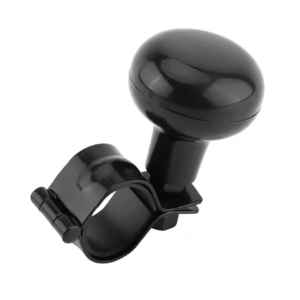
Steering Wheel Ball Spinner Knob – Black
The classic all-black steering ball with a smooth ball-bearing spin.
£14.99
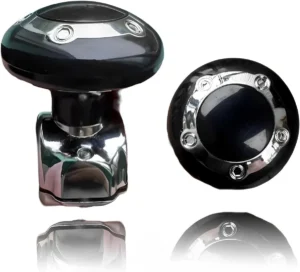
Chrome Steering Wheel Spinner Knob
Chrome-trimmed spinner knob with a metal clamp, in black or silver.
£14.99
✓ Free UK Royal Mail delivery · ✓ Dispatched within 3 working days · ✓ 14-day returns · ✓ 1-year warranty
FAQs
Is it illegal to drive with a broken arm in the UK?
There is no specific law banning it. What matters is whether you are in full control of the vehicle. If your injury means you cannot keep proper control — or you drive against medical advice — you risk an offence and an invalidated policy.
Can I drive with my arm in a sling?
No — not while the sling is on. It immobilises the arm and limits your ability to steer in an emergency.
Will a steering wheel knob help after shoulder surgery?
It can help once your surgeon clears you to drive and the sling is off — a knob lets your good hand do the steering while the operated shoulder recovers. It will not shorten the non-driving period your surgeon sets.
Do I need to tell my insurer about a temporary injury?
Yes. An undisclosed injury can give them grounds to refuse a claim. A quick call before you drive is the safe move.
Do I need to tell the DVLA about a broken arm?
Not usually for short recoveries — only if the injury is expected to affect your driving for more than three months.
