Introduction
For many in the UK, driving independence is crucial. When mobility challenges arise, adaptive solutions become essential. This guide, tailored for the UK market, compares various adaptive driving aids: steering wheel knobs, joystick steering, reduced-effort steering, and hand controls. We’ll explore their functions, benefits, drawbacks, and suitability to help you make an informed choice for safe and comfortable driving.
Understanding Adaptive Driving Aids
Adaptive driving aids are specialised vehicle modifications assisting drivers with physical limitations. They enhance driving independence by simplifying control over steering, acceleration, and braking, bridging the gap between a driver’s physical capabilities and vehicle operation.
Steering Wheel Knobs (Spinner Knobs/Brodie Knobs)
Description and Functionality
A steering wheel knob, or spinner knob, is an attachable device clamped onto the steering wheel rim. It provides a single point of contact, allowing one-handed rotation with minimal effort. This is particularly useful for manoeuvres requiring significant steering input, such as parking or tight turns.
Pros
Steering wheel knobs are cost-effective and easy to install. They significantly aid one-handed steering for drivers with limited grip strength or restricted arm movement, reducing physical strain and enhancing control.
Cons
Potential drawbacks include the risk of over-steering or loss of control if used incorrectly. In the UK, their legality and safety are scrutinised by the DVLA and DVSA during driving tests or MOT inspections, especially if they obstruct safe steering or are improperly fitted. Incorrect installation can also damage the steering wheel.
Suitability
Steering wheel knobs suit drivers with limited use of one hand or arm but otherwise good upper body strength and coordination. They are often used alongside other adaptive aids. A professional assessment is crucial to ensure suitability and proper training for safe operation.
Joystick Steering
Description and Functionality
Joystick steering replaces the traditional steering wheel with an electronic joystick controller. Advanced systems can integrate acceleration and braking, offering a comprehensive drive-by-wire solution. The driver manipulates the joystick, and electronic signals translate these inputs into steering commands.
Pros
The primary advantage is the minimal physical effort required, making it ideal for drivers with severe mobility impairments, such as significant upper-limb weakness or paralysis. These systems offer high precision and advanced control with subtle movements. Removing the steering wheel and column can also free up cabin space, improving accessibility.
Cons
Joystick steering is costly and complex to install, requiring extensive vehicle modifications. There is a significant learning curve, necessitating intensive training. Limited availability and specialised vehicle requirements further restrict its accessibility. The technology is still evolving, hindering widespread adoption.
Suitability
Joystick steering is best for drivers with severe upper limb weakness or paralysis who cannot operate a standard steering wheel or other steering aids. Due to its complexity and critical safety implications, a comprehensive assessment and extensive training from a qualified Driving Mobility Centre are essential to ensure safe and effective operation and regulatory compliance.
Reduced-Effort Steering
Description and Functionality
Reduced-effort steering modifies a vehicle’s power steering system to decrease the physical force needed to turn the wheel. This ranges from ‘lightened power steering’ to ‘zero-effort steering’. The modification typically adjusts the hydraulic or electric power steering pump to amplify assistance, making the steering wheel feel much lighter.
Pros
Key benefits include reduced driver fatigue, especially on long journeys or during low-speed manoeuvres. For drivers with moderate arm/shoulder weakness, arthritis, or reduced stamina, it makes driving more comfortable. Crucially, it maintains a traditional steering-wheel feel, appealing to those who prefer a familiar driving experience with lower physical demand.
Cons
Reduced-effort steering can be expensive to install, requiring professional modification of the vehicle’s existing steering system. This complex process demands certified specialists to ensure safety and compliance with vehicle standards.
Suitability
This aid is ideal for drivers with moderate arm or shoulder weakness, conditions like arthritis, or a general reduction in physical stamina that make standard steering challenging but do not prevent steering wheel use. It offers a valuable middle-ground solution. A professional assessment is vital to determine the appropriate level of assistance and to ensure suitability for both the driver and the vehicle.
Hand Controls (for Acceleration and Braking)
Description and Functionality
Hand controls enable drivers to operate the accelerator and brake pedals using their hands. These mechanical or electronic levers are installed within easy reach. Common types include ‘push-pull’ systems (push for brake, pull for accelerate) and ‘push-rotate’ systems (push for brake, twist for accelerate).
Pros
Hand controls are fundamental for individuals with lower limb mobility issues, such as paralysis, amputation, or significant leg weakness. They transfer acceleration and braking control to the upper body, fostering driving independence. These systems are widely available and recognised, making them a trusted solution.
Cons
Operating hand controls requires sufficient upper body strength and coordination to manage both steering and pedal functions. This can lead to fatigue during extended driving, making them unsuitable for all drivers, particularly those with compromised upper body strength.
Suitability
Hand controls are primarily for drivers with paralysis, amputation, or significant leg weakness who cannot use conventional foot pedals. They are often combined with steering aids for a complete adaptive driving solution. A thorough assessment by a Driving Mobility Centre is essential to ensure the driver has the necessary physical capabilities and receives proper training.
UK Legal and Regulatory Landscape
Navigating the UK’s legal framework for adaptive driving aids is crucial. The DVLA requires drivers to declare medical conditions and vehicle adaptations; non-compliance can lead to fines or invalidated insurance. The DVSA oversees driving tests for adapted vehicles and MOT rules. All adaptations must be professionally installed and maintained to meet these standards.
Driving Mobility Centres offer invaluable professional assessments and advice, guiding individuals to suitable adaptations and providing training. While steering wheel knobs are generally permissible, their use can be scrutinised during tests or MOTs if they are insecure or impede control. Always seek professional advice from a Driving Mobility Centre or adaptation specialist for full compliance and safety.
Choosing the Right Aid: Key Considerations
Selecting an adaptive driving aid is a personal decision guided by several factors:
- Individual Needs: The nature and progression of your disability, current physical capabilities, and potential future changes are paramount. A thorough assessment identifies effective solutions.
- Vehicle Type: Not all adaptations are compatible with every vehicle. Make, model, and existing features influence feasibility and installation cost.
- Cost and Installation: Financial implications vary significantly, from inexpensive steering wheel knobs to costly electronic joystick systems. Professional fitting is almost always required for safety and compliance.
- Professional Assessment: Driving Mobility Centres provide impartial, expert advice, comprehensive assessments, and tailored training. Their guidance ensures safe, effective, and legally compliant adaptations, fostering driving confidence and independence.
Shop UK steering wheel knobs
Clamp-on spinner knobs that fit steering wheel rims about 28–40mm thick. No drilling, removable in minutes.
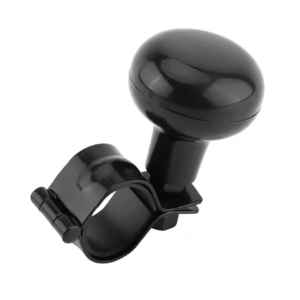
Steering Wheel Ball Spinner Knob – Black
The classic all-black steering ball with a smooth ball-bearing spin.
£14.99
View knob →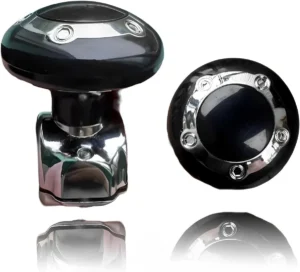
Chrome Steering Wheel Spinner Knob
Chrome-trimmed spinner knob with a metal clamp, in black or silver.
£14.99
View knob →✓ Free UK Royal Mail delivery · ✓ Dispatched within 3 working days · ✓ 14-day returns · ✓ 1-year warranty
Frequently Asked Questions
What steering aids are available for disabled drivers in the UK?
Common options include spinner knobs (steering balls), tri-pin and palm grips for limited grip, and more specialist systems for drivers with very limited strength or movement. A Driving Mobility centre assessment can recommend the right aid for you: see Driving Mobility.
Conclusion
The UK offers a diverse range of adaptive driving aids, from steering wheel knobs to joystick steering, reduced-effort steering, and hand controls, enabling independent driving for those with mobility challenges. The key is a personalised approach and professional guidance. By understanding the options, considering individual circumstances, and engaging with expert services like Driving Mobility Centres, drivers can confidently choose the right aids for safe, comfortable, and independent travel on UK roads. Embrace adaptive technology to continue your journey with confidence and control.
