Steering wheel knobs, often referred to as ‘spinner knobs’ or ‘brodie knobs’, are devices designed to assist drivers with one-handed steering, particularly during low-speed manoeuvres. While they offer significant advantages for certain drivers, especially those with mobility challenges, their safe and legal use in the UK requires a thorough understanding of proper technique and adherence to established guidelines. This comprehensive guide will delve into the nuances of using a steering wheel knob effectively to ensure both safety and compliance with UK road regulations.
Understanding Steering Wheel Knobs: Legality and Purpose in the UK
Before exploring driving techniques, it is crucial to establish a clear understanding of what a steering wheel knob is and of its legal status in the United Kingdom.
What is a Steering Wheel Knob?
A steering wheel knob is a small, usually spherical or ergonomic, attachment that clamps onto the rim of a vehicle’s steering wheel. Its primary function is to provide a pivot point, allowing a driver to turn the steering wheel with minimal effort using only one hand. This can be particularly beneficial for individuals with limited hand dexterity, those operating vehicles in tight spaces, or professional drivers who frequently execute complex manoeuvres.
The UK Legal Landscape: What the Law Says
In the UK, the legality of steering wheel knobs is a common source of confusion. Contrary to popular belief, they are generally legal for use on private passenger vehicles, provided they are fitted correctly and do not impede safe operation. The Driver and Vehicle Standards Agency (DVSA) and the MOT test guidelines do not specifically prohibit their use. However, their application is often associated with specific circumstances:
- Disabled Drivers: For individuals with disabilities, steering wheel knobs are frequently prescribed as adaptive driving aids following an assessment by organisations like Driving Mobility. In such cases, they are considered essential modifications that enable safe vehicle control.
- MOT Test: A properly fitted steering wheel knob will typically not cause an MOT failure. The MOT test focuses on the function and security of the steering system itself, not on accessories clamped to the rim. However, a loose, damaged, or obstructive knob could be flagged as a deficiency if it compromises steering operation or security.
- Road Vehicles (Construction and Use) Regulations 1986: These regulations require that steering gear be maintained in good working order and that no vehicle be used in a condition that poses a danger of injury. A securely fitted knob that does not interfere with the steering mechanism generally complies with these regulations.
It is important to note that while generally permitted, any modification that could compromise a driver’s control or the vehicle’s safety could be subject to scrutiny. Always ensure the knob is securely attached and does not obstruct airbags or other controls.
Why Consider a Steering Wheel Knob?
Beyond accessibility, steering wheel knobs can offer practical benefits in specific driving scenarios:
- Enhanced Manoeuvrability: They significantly reduce the effort required for rapid steering inputs, making parking and navigating tight spaces considerably easier.
- Reduced Fatigue: For drivers who spend long hours behind the wheel or frequently perform intricate manoeuvres, a knob can lessen strain on the arms and shoulders.
- Improved Control for Specific Tasks: In agricultural or industrial settings, where drivers may need to operate other controls simultaneously, a knob allows for precise steering with one hand.
Mastering the Grip: Proper Technique for Safety and Control
Effective and safe use of a steering wheel knob hinges on adopting the correct grip and understanding how it integrates with traditional steering techniques.
The “Clock Face” Analogy Revisited
Traditional driving instruction often advocates the ‘ten to two’ or ‘quarter to three’ hand positions on the steering wheel. When using a steering wheel knob, this changes. The knob effectively becomes the primary point of contact for one hand, typically the left hand, for right-hand drive vehicles in the UK. The other hand should remain free to operate other controls or be ready to assist with steering.
Maintaining a Light, Controlled Grip
With a steering wheel knob, the temptation might be to grip it tightly. However, a light, controlled grip is paramount. The knob should facilitate smooth, fluid rotation of the wheel, not rigid force. Excessive grip can lead to jerky movements and oversteering. Allow your hand to pivot around the knob, guiding the wheel rather than wrestling it.
Two-Handed Driving: When and How
While a steering wheel knob aids one-handed steering, it is not a replacement for two-handed control when conditions demand it. For higher speeds, complex road conditions, or emergency situations, reverting to a two-handed grip provides maximum control and stability. The knob should be seen as an aid, not a sole method of steering. Practise transitioning smoothly between one-handed (knob-assisted) and two-handed steering.
Driving with a Steering Wheel Knob: Situational Awareness
The application of a steering wheel knob varies significantly with driving environment and speed.
Low-Speed Manoeuvres: Parking and Tight Spaces
This is where the steering wheel knob truly shines. For tasks such as parallel parking, reversing into a bay, or executing a three-point turn, the knob allows rapid, continuous steering wheel rotation with minimal effort. This precision is invaluable in confined spaces. When performing these manoeuvres:
- Focus on smooth, continuous turns: Use the knob to maintain a fluid motion and avoid stop-start steering.
- Combine with mirror checks: Constant observation through mirrors and over your shoulder is critical, as the knob allows you to keep one hand on the wheel while adjusting your body for better visibility.
- Anticipate steering lock: Learn your vehicle’s steering limits to avoid unnecessary strain or jerky movements at full lock.
High-Speed Driving: Motorways and A-Roads
Using a steering wheel knob at higher speeds, such as on motorways or fast A-roads, requires extreme caution and is generally not recommended for continuous use. At speed, even small steering inputs can have significant effects. A steering wheel knob can amplify these inputs, making it easier to oversteer and potentially lose control. For high-speed driving:
- Minimise knob use: Revert to a traditional two-handed grip for stability and precise, subtle adjustments.
- Maintain a straight line: The knob should only be used for very minor corrections, if at all. The goal is to maintain a steady course with minimal steering input.
- Be aware of crosswinds and road imperfections: These can cause sudden deviations, where a two-handed grip offers superior control.
Navigating Roundabouts and Junctions
Roundabouts and junctions often require a blend of low-speed manoeuvring and controlled steering. When approaching:
- Plan your exit: Anticipate the required steering input well in advance.
- Smooth transitions: Use the knob to initiate turns smoothly, but be prepared to use both hands for more significant adjustments or if traffic conditions become unpredictable.
- Avoid abrupt movements: Sudden steering changes can unsettle the vehicle and surprise other road users.
Avoiding Common Pitfalls: Oversteering and Loss of Control
One of the primary risks associated with steering wheel knobs, particularly for inexperienced users, is oversteering. Understanding and mitigating this risk is vital for safe operation.
The Risk of Oversteering
Oversteering occurs when the steering wheel is turned too sharply or too quickly for the speed and conditions, causing the vehicle to turn more abruptly than intended. With a steering wheel knob, the reduced effort required to turn the wheel can inadvertently lead to excessive steering input, especially at higher speeds or when startled. This can result in a loss of control, particularly on slippery surfaces or during emergency braking.
Smooth Inputs, Smooth Outputs
To prevent oversteering, cultivate a habit of making smooth, gradual steering inputs. Think of guiding the vehicle rather than forcing it. The knob should enhance fluidity, not enable abruptness. Practise gentle turns and corrections to develop a feel for the vehicle’s response with the knob attached.
Emergency Situations: Rapid Response
In an emergency, such as needing to swerve to avoid an obstacle, rapid and precise steering is essential. While a knob can facilitate quick turns, it can also hinder the ability to make small, controlled adjustments or to quickly revert to a full two-handed grip for maximum leverage. If an emergency arises, instinctively revert to a traditional two-handed grip on the steering wheel to regain optimal control and leverage.
Building Confidence and Proficiency
Like any driving aid, proficiency with a steering wheel knob comes with practice and a systematic approach to learning.
Practice Makes Perfect: Safe Environments
Begin by practising in a safe, controlled environment, such as an empty car park. Focus on:
- Basic manoeuvres: Practise full lock-to-lock turns, figure-eights, and parking exercises.
- Speed control: Experiment with how the knob affects steering at very low speeds, gradually increasing your comfort level.
- Instructor guidance: If possible, seek guidance from a qualified driving instructor experienced with adaptive driving aids. They can provide tailored advice and identify any unsafe habits.
Gradual Integration into Daily Driving
Once comfortable in a controlled environment, gradually integrate using the steering wheel knob into your daily driving. Start with familiar routes and less congested areas. Pay close attention to how the vehicle responds and how your body adapts to the new steering dynamic. Avoid using the knob in challenging conditions (heavy traffic, adverse weather) until you are fully confident in your abilities.
Regular Checks: Ensuring Secure Fitment
Before every journey, or at least regularly, check that your steering wheel knob is securely fitted. A loose knob can be a significant safety hazard, leading to unpredictable steering and potential loss of control. Ensure all clamps are tight and that the knob does not interfere with any other steering wheel functions, such as horn operation or indicator stalks.
Shop UK steering wheel knobs
Clamp-on spinner knobs that fit steering wheel rims about 28–40mm thick. No drilling, removable in minutes.
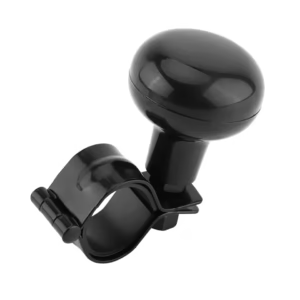
Steering Wheel Ball Spinner Knob – Black
The classic all-black steering ball with a smooth ball-bearing spin.
£14.99
View knob →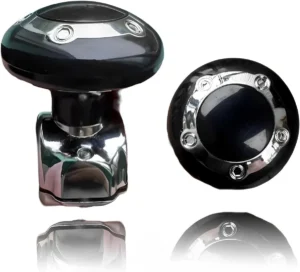
Chrome Steering Wheel Spinner Knob
Chrome-trimmed spinner knob with a metal clamp, in black or silver.
£14.99
View knob →✓ Free UK Royal Mail delivery · ✓ Dispatched within 3 working days · ✓ 14-day returns · ✓ 1-year warranty
Conclusion
Steering wheel knobs can be invaluable tools for enhancing driving comfort and control, particularly for those who require adaptive solutions or frequently perform low-speed manoeuvres. In the UK, their use is generally permissible, provided they are fitted correctly and do not compromise vehicle safety or driver control. By understanding the legal framework, mastering proper grip techniques, exercising situational awareness, and diligently practising, drivers can safely and confidently integrate a steering wheel knob into their driving routine. Always prioritise smooth, controlled inputs and be prepared to revert to a traditional two-handed grip when conditions demand maximum stability and precision. Safe driving is paramount, and with responsible use, a steering wheel knob can be a beneficial addition to your driving experience.
