The automotive landscape constantly evolves, introducing innovations to enhance safety, comfort, and control. Power steering, a transformative development, made steering effortless. Despite its widespread adoption, the steering wheel knob, or ‘brodie knob’, still sparks debate.
This article explores the historical context of steering assistance, the modern relevance of steering wheel knobs in the UK, and their place alongside advanced power steering and automatic gearboxes. We will cover legalities, practicalities, and their enduring appeal, offering a comprehensive guide for UK motorists.
The Dawn of Power Steering: A Historical Perspective
Before power steering, manoeuvring vehicles, especially at low speeds, required significant physical effort. Early cars made driving physically demanding. The concept of power steering assistance appeared as early as 1876, but widespread commercial application began in the mid-20th century.
The 1951 Chrysler Imperial introduced the first commercially available power steering system, “HydraGuide.” This hydraulic system used fluid pressure to assist drivers, greatly reducing the effort needed to turn wheels. It was a game-changer for larger vehicles and quickly became an industry standard. Over the decades, hydraulic power steering transformed driving into a more accessible activity. The UK market, like others, saw power steering become an expected feature in new cars, leading to further advancements.
Steering Wheel Knobs: A Legacy of Utility
Steering wheel knobs, or ‘brodie knobs’, predate modern power steering. They offered mechanical advantage, allowing one-handed steering, useful for large vehicles, agricultural machinery, or tight manoeuvres. For lorry drivers or tractor operators, a knob provided a practical solution for quick steering inputs.
Legality and Regulations in the UK
The legality of steering wheel knobs in the UK often confuses motorists. Generally, they are not illegal under DVSA regulations, provided they are used safely and do not impede vehicle control or create a hazard. The DVLA does not classify them as a disability adaptation, so no licence modification is usually needed, unless medically required.
However, caveats exist. A knob must not interfere with safe vehicle operation. During an MOT test, examiners check for a secure fit and for no damage to the steering wheel that compromises the mechanism. Obstruction of airbag deployment or hindering full control in an emergency could be a safety risk. Drivers should inform their insurers of any modifications to avoid issues. While the Road Traffic Act doesn’t specifically mention knobs, drivers must maintain proper control; any accessory hindering this could lead to legal repercussions.
The Rise of Electric Power Steering (EPS)
Hydraulic power steering, though revolutionary, had drawbacks: complexity, weight, and engine power consumption. The late 20th and early 21st centuries saw the rise of Electric Power Steering (EPS).
EPS systems use an electric motor for assistance, offering significant advantages:
- Improved Fuel Efficiency: Power is drawn only when needed.
- Reduced Maintenance: No hydraulic fluid.
- Enhanced Customisation: Flexible steering feel and driving modes.
- Integration with ADAS: Crucial for features like lane-keeping assist and autonomous driving.
EPS is now the dominant power steering technology in new UK cars, valued for its efficiency, adaptability, and integration with advanced vehicle systems.
Modern Relevance: Comfort, Disability, and Automatic Gearboxes
With modern cars universally equipped with efficient power steering, do steering wheel knobs still have a place? The answer is nuanced.
For most drivers, modern power steering, especially EPS, provides sufficient assistance for all manoeuvres. The mechanical advantage offered by a knob is largely obsolete. However, specific scenarios highlight their continued relevance:
- Drivers with Disabilities: Knobs are vital adaptations for individuals with limited hand/arm mobility, enabling single-handed steering. The DVLA may require them as a licence condition, making them legitimate vehicle adaptations. Consultation with driving assessment centres and the DVLA is crucial for compliance.
- Enhanced Comfort and Convenience: Some drivers, even without disabilities, find knobs comfortable for repetitive manoeuvres (e.g., agricultural work, urban driving). Quick, effortless wheel spinning can reduce fatigue.
- Automatic Gearboxes: The rise of automatic gearboxes frees a hand, making single-handed knob steering a less distracting option for those who prefer it, especially in vehicles with large steering wheels.
Safety is paramount. Any steering wheel knob must be correctly fitted, not obstruct airbags, and allow full vehicle control. Improper use can lead to MOT failures, insurance issues, or legal penalties under the Road Traffic Act.
Shop UK steering wheel knobs
Clamp-on spinner knobs that fit steering wheel rims about 28–40mm thick. No drilling, removable in minutes.
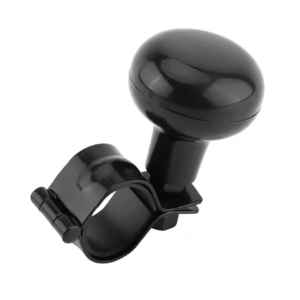
Steering Wheel Ball Spinner Knob – Black
The classic all-black steering ball with a smooth ball-bearing spin.
£14.99
View knob →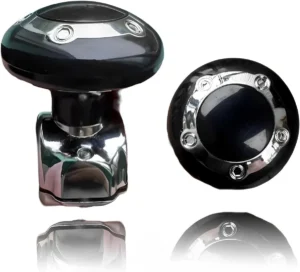
Chrome Steering Wheel Spinner Knob
Chrome-trimmed spinner knob with a metal clamp, in black or silver.
£14.99
View knob →✓ Free UK Royal Mail delivery · ✓ Dispatched within 3 working days · ✓ 14-day returns · ✓ 1-year warranty
Conclusion
The journey from rudimentary steering mechanisms to sophisticated electric power steering systems has been a testament to automotive innovation, fundamentally altering the driving experience. Power steering, in its various forms, has made driving more accessible, safer, and less physically demanding for the vast majority of motorists. The transition from hydraulic to electric power steering has further refined this technology, offering greater efficiency, adaptability, and seamless integration with the advanced driver-assistance systems that define modern vehicles.
Despite these advancements, the steering wheel knob, a relic from a bygone era of manual steering, continues to hold a niche but significant place. While no longer necessary for most drivers with powerful, responsive steering systems, it remains a crucial aid for individuals with disabilities, enabling them to drive safely and independently. For others, it offers a perceived enhancement in comfort and convenience, particularly in specific driving contexts or with automatic gearboxes.
The key takeaway for UK drivers is that while steering wheel knobs are generally legal, their use comes with responsibilities. Adherence to DVSA guidelines, ensuring the device does not compromise control or safety, and informing insurance providers are paramount. Ultimately, the decision to use a steering wheel knob in a modern car equipped with power steering is a personal one, balancing historical utility with contemporary technology, and always prioritising safety and compliance with UK road laws.
