Short answer: no. A steering wheel spinner knob — the clamp-on kind that grips your steering wheel — is not something the DVLA asks to be told about. It’s an accessory, not a vehicle adaptation or a medical issue. What the DVLA does want to know about is the underlying medical condition that might be affecting your driving. That’s the distinction that matters, and it’s one worth getting right before you buy.
Why People Worry About This
It’s a completely reasonable question. If you’re considering a spinner knob because of arthritis, a wrist injury, reduced grip strength or a disability, you’ve probably already been doing careful research — maybe checking our legality guide or reading up on driving assessments in the UK. And when the words “DVLA” and “medical condition” appear in the same sentence, most people sensibly think: will I get in trouble if I don’t report this?
The good news is that the knob itself isn’t the issue. But the reason you’re buying one might be. Let’s break it down properly.
What the DVLA Actually Asks You to Report
The DVLA’s rules are about you, not your steering wheel. According to gov.uk guidance, you must tell the DVLA if you hold a driving licence and:
- you develop a “notifiable” medical condition or disability, or
- an existing condition or disability has got worse since you got your licence.
“Notifiable” essentially means anything that could affect your ability to drive safely. The DVLA gives examples including:
- diabetes (or taking insulin)
- syncope (fainting)
- heart conditions, including atrial fibrillation and pacemakers
- sleep apnoea
- epilepsy
- strokes
- glaucoma
There’s a full A-to-Z list on gov.uk, and it’s worth checking — the list is broader than most people expect. You can check and report many conditions online, and if you’re unsure, the DVLA invites you to contact them directly.
The penalties are real: you could be fined up to £1,000 if you don’t tell the DVLA about a condition that might affect your ability to drive safely, and you could face prosecution if you’re involved in an accident.
So the question to ask yourself isn’t “do I need to report my steering wheel knob?” — it’s “does the condition that led me to want one count as notifiable?” In most cases, conditions involving joint pain, limited mobility or grip strength problems can fall under the DVLA’s scope, since they may affect how safely you control the vehicle. Only you — ideally with your doctor’s advice — can make that call.
The Knob Itself: An Accessory, Not an Adaptation
Here’s where the reassurance comes in. The DVLA does sometimes get involved with vehicle modifications, but the category they care about is things like structural changes to the chassis or bodyshell, engine changes, colour changes — the kind of thing that goes on your V5C logbook. A clamp-on steering wheel knob doesn’t change your car’s structure, its engine, or anything on the registration document. It grips the wheel with a clamp, and you can remove it just as easily as you fitted it.
The DVLA also mentions that in some medical-licence cases they may require a driver to “adapt their car by fitting special controls” — that’s referring to permanent fitted adaptations such as hand controls or modified pedal systems, assessed through organisations like Driving Mobility. A removable spinner knob is a different thing entirely: it’s a steering aid you choose to use, much like a thicker steering wheel cover or a seat cushion. There is no process, form or requirement to notify the DVLA that you’ve fitted one.
That said, the usual caveats apply: the knob should be fitted securely, used responsibly, and not used in a way that impairs your control of the vehicle (for example, on a wheel with an airbag in it — though that applies to how you drive, not to DVLA reporting).
“But My Doctor Hasn’t Said Anything — Do I Still Need to Tell Them?”
This is where people get tripped up, and it’s worth being honest about. The DVLA’s obligation falls on you as the licence holder, not your doctor. Your doctor may advise you to stop driving or to report a condition, but the legal duty to tell the DVLA sits with you regardless of whether anyone has prompted you.
A few practical pointers:
- If your condition is new or getting worse, check the gov.uk A-to-Z list and report it. Many car and motorcycle licence holders can do this online.
- If you’re unsure whether your condition counts, err on the side of checking. The DVLA would rather hear from you than not.
- Telling the DVLA doesn’t automatically mean losing your licence. They assess each case individually and may issue a shorter-term licence, require a driving assessment, or simply note it and carry on. You can usually keep driving while they’re considering your case.
- Your insurance is separate from the DVLA. An insurer might ask about modifications or medical conditions — but a clamp-on knob is generally treated as an accessory rather than a modification. If in doubt, a quick call to your insurer is cheap peace of mind.
So What Should You Actually Do?
Here’s the practical sequence, in plain terms:
- Check your condition, not your knob. Look up whether your medical condition or disability is notifiable on gov.uk. If it is — or might be — tell the DVLA. That’s your legal obligation, knob or no knob.
- Don’t notify the DVLA about the knob. There’s no form for it, no category it fits into, and no official guidance asking for it. You’d simply be creating confusion.
- Make sure the knob is safe to use. Fit it properly, ensure it doesn’t slip, and consider whether you could use one safely with your particular steering wheel and airbag setup. Our legality guide covers the safety side in more detail.
- Consider a driving assessment if you’re unsure. If a medical condition has changed how you drive, an independent assessment through Driving Mobility (as referenced in DVLA guidance) can confirm what’s safe for you — including which steering aids suit you. Our guide to driving assessments explains how the process works in the UK.
The Bottom Line
You won’t get in trouble for fitting a steering wheel knob — there’s nothing to declare and nobody to tell. The only thing the DVLA wants to hear about is the medical side: a new or worsening condition that could affect your ability to drive safely. Get that bit right, and the knob is just a tool to make driving more comfortable.
If you’re ready to choose one, our Premium Ball Spinner Knob – Black offers a classic, easy-grip shape, while the Chrome Spinner Knob – Black / Silver suits drivers who want a firmer, more polished feel. Both clamp on and off in seconds — no modifications, no paperwork, no DVLA forms.
Shop UK steering wheel knobs
Clamp-on spinner knobs that fit steering wheel rims about 28–40mm thick. No drilling, removable in minutes.
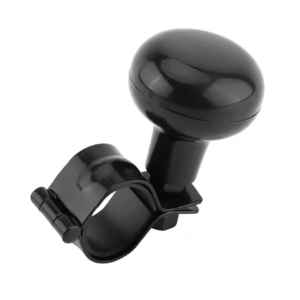
Steering Wheel Ball Spinner Knob – Black
The classic all-black steering ball with a smooth ball-bearing spin.
£14.99
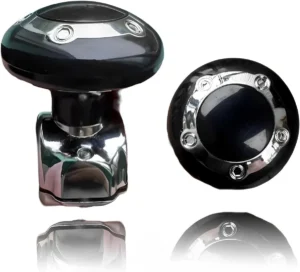
Chrome Steering Wheel Spinner Knob
Chrome-trimmed spinner knob with a metal clamp, in black or silver.
£14.99
✓ Free UK Royal Mail delivery · ✓ Dispatched within 3 working days · ✓ 14-day returns · ✓ 1-year warranty
Frequently Asked Questions
Do I need to tell the DVLA I’ve fitted a steering wheel knob?
No. There is no DVLA requirement to report fitting a clamp-on steering wheel knob. It’s an accessory, not a reportable vehicle modification.
Do I need to tell the DVLA about my arthritis / wrist injury / grip problems?
Possibly. The obligation is about the medical condition, not the knob. If your condition could affect your ability to drive safely, check the gov.uk A-to-Z list of notifiable conditions — and when in doubt, tell the DVLA. Failing to report a notifiable condition can mean a fine of up to £1,000.
Will telling the DVLA about my condition mean I lose my licence?
Not necessarily. The DVLA assesses each case individually — outcomes range from a shorter-term licence to a driving assessment to no change at all. You can usually keep driving while your case is being considered.
Do I need to tell my insurer about the knob?
Generally, a clamp-on knob is an accessory rather than a modification, so it shouldn’t need declaring. But insurance policies vary, so if you’re unsure, check with your insurer directly — a two-minute call beats an argument after a claim.
