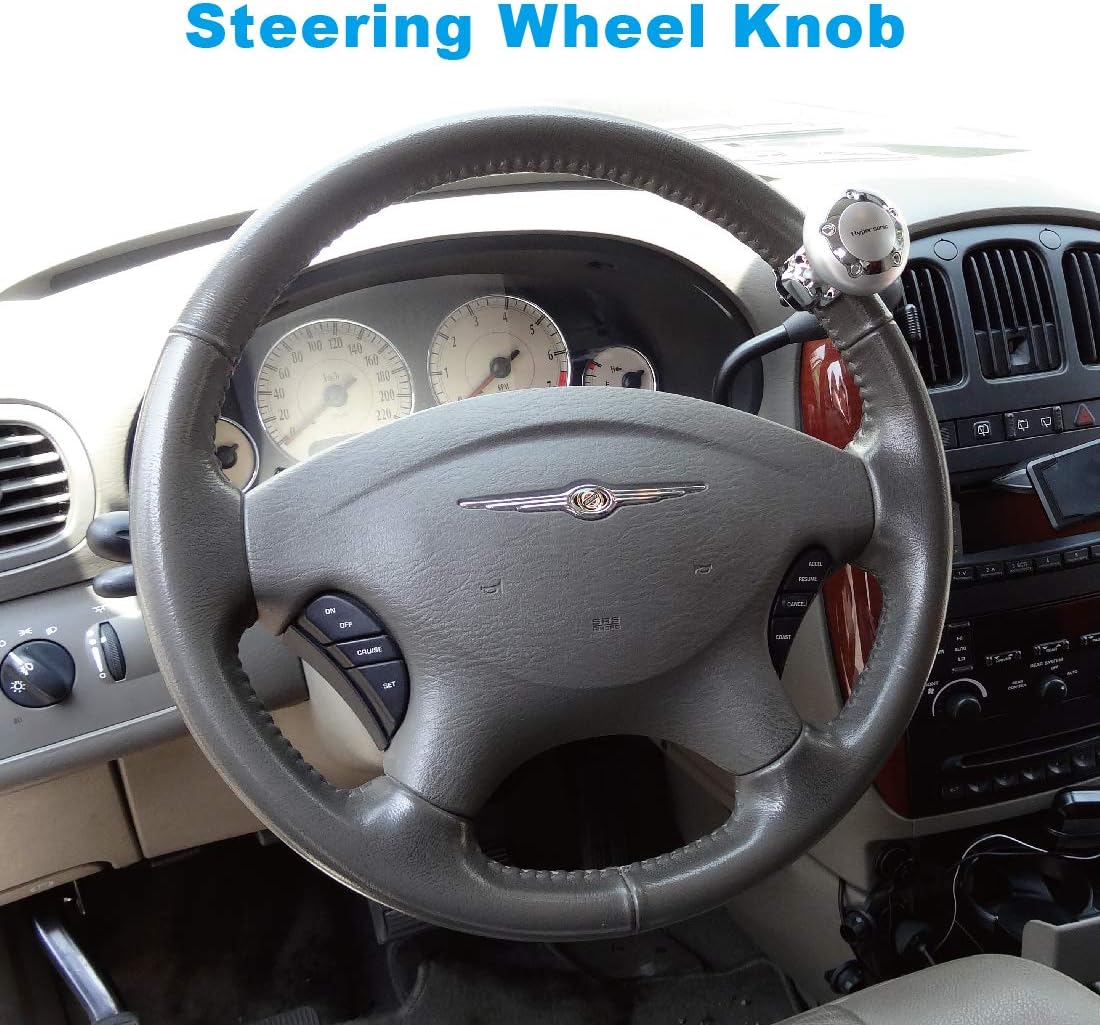
Returning to driving after a stroke marks a significant step towards regaining independence, yet it presents unique challenges and responsibilities. The ability to drive is crucial for many, offering freedom and accessibility. However, a stroke can impair physical and cognitive functions vital for safe driving, necessitating careful consideration and strict adherence to regulations. In the United Kingdom, the Driver and Vehicle Licensing Agency (DVLA) provides clear guidelines to ensure road safety. This guide will walk you through the process of returning to driving in the UK after a stroke, covering DVLA notification, driving assessments, and how adaptive equipment, such as steering wheel spinner knobs, can assist post-stroke drivers.
The Immediate Aftermath: Driving Restrictions and DVLA Notification
Following a stroke or a transient ischaemic attack (TIA), car and motorbike drivers must not drive for a minimum of one calendar month [1]. This period allows for initial recovery and stabilisation. Bus and lorry drivers face stricter regulations, with a minimum driving cessation of one year [1].
Individuals bear personal responsibility for assessing their fitness to drive. Even without explicit instruction from a healthcare professional, it is your legal and moral obligation to determine if your stroke has affected your ability to drive safely [1].
When and How to Notify the DVLA
The DVLA must be notified if your stroke results in lasting effects impacting your driving ability or if you have certain medical conditions [1]. While not required during the initial one-month non-driving period, notification becomes crucial if, after this time, you experience persistent physical, cognitive, or visual issues [1].
To notify the DVLA, you can:
- Inform them online via the official GOV.UK website [1].
- Contact DVLA medical enquiries by phone on 0300 790 6806 for advice.
- Bus and lorry drivers must inform the DVLA/DVA using form STR1V.
Consequences of Non-Notification
Failing to inform the DVLA about a medical condition affecting your driving can lead to severe penalties, including a fine of up to £1,000 [1]. Involvement in a road traffic collision without declared conditions could result in prosecution and a criminal conviction [1].
Informing Your Insurance Company
It is a legal requirement to inform your motor insurance company if you have had a stroke or TIA [1]. Failure to do so could invalidate your insurance policy, leading to significant financial and legal repercussions if found driving without valid insurance [1].
The Driving Assessment Process
For many post-stroke drivers, a formal driving assessment is crucial for determining their fitness to return to the road. The DVLA/DVA may request such an assessment, especially if there are concerns about physical, cognitive, or visual capabilities [1].
Purpose and Components of a Driving Assessment
The primary purpose of a driving assessment is to objectively evaluate your ability to control a vehicle safely. These assessments, typically conducted by specialist centres, may involve:
- Medical Checks: Review of medical history and current condition.
- Eye Tests: To ensure vision meets required driving standards.
- Cognitive Assessments: To evaluate reaction time, attention, memory, and decision-making.
- Practical Driving Assessment: Driving an adapted vehicle with an instructor, allowing assessors to observe physical control, hazard perception, and safe manoeuvring [1].
Driving Mobility Centres
Driving Mobility Centres are vital, offering professional advice and assessments for individuals with medical conditions or disabilities [1]. Accredited by the national charity Driving Mobility, they provide individualised guidance, arrange assessments, and support the return to driving [1]. Find your local centre at drivingmobility.org.uk [1].
How Steering Wheel Knobs (Spinner Knobs) Help Post-Stroke Drivers
For some stroke survivors, particularly those with hemiplegia (weakness or paralysis on one side), traditional two-handed steering can be challenging. Adaptive equipment, like a steering wheel spinner knob, can make a significant difference.
What is a Spinner Knob?
A steering wheel spinner knob, also known as a steering wheel ball or steering aid, clamps securely to the steering wheel rim [2]. It features a knob or handle that allows the driver to turn the wheel with a single hand, increasing leverage and reducing physical effort [2].
Benefits for Post-Stroke Drivers
Spinner knobs offer several key benefits for drivers recovering from a stroke:
- One-Handed Steering: Enables individuals with limited use of one arm or hand to maintain full control [2].
- Reduced Effort: Increased leverage reduces the force needed to turn the wheel, aiding those with reduced arm strength or mobility [2].
- Improved Control: Facilitates smoother, more precise steering with one hand, especially during low-speed manoeuvres.
- Enhanced Safety: By easing steering, spinner knobs contribute to overall driving safety, allowing drivers to focus more on the road.
Legality and DVLA Licence Conditions for Spinner Knobs
In the UK, steering wheel spinner knobs are legal for disabled drivers when deemed a necessary adaptation and reflected in DVLA licence conditions [2]. They are prescribed aids for those with specific medical needs.
DVLA Licence Condition Code 40
The primary DVLA licence condition code for steering wheel spinner knobs is Code 40: Modified steering [2]. If a driving assessment recommends a spinner knob, your licence will be issued with this code, legally requiring a spinner knob fitted to your vehicle whenever you drive [2].
Code 78 (restricted to automatic-transmission vehicles) is often paired with Code 40 for one-handed drivers, ensuring continuous steering-wheel control without needing to release the steering wheel for gear changes [2].
Driving Without the Required Adaptation
Driving without the required adaptation, if your licence carries Code 40, is a serious offence [2]. It is equivalent to driving without a valid licence and carries significant penalties. Strict adherence to licence conditions is crucial [2].
Timeline for Returning to Driving
The timeline for returning to driving after a stroke is highly individual. While the initial one-month non-driving period is mandatory, the subsequent timeline is influenced by:
- Type of Stroke: Varying impacts on recovery and driving ability [1].
- Effects of the Stroke: Specific physical, cognitive, and visual impairments determine recovery and adaptation needs [1].
- Other Medical Conditions: Pre-existing or new conditions affecting fitness to drive [1].
- Recovery Progress: The pace and extent of recovery impact when you can safely return to driving.
Always follow medical professionals’ advice and driving assessment recommendations. The DVLA makes the final decision regarding your licence, and their guidance must be followed [1].
Conclusion
Returning to driving after a stroke demands patience, responsibility, and understanding of UK regulations. DVLA guidelines and professional driving assessments ensure road safety. For many, adaptive equipment like steering wheel spinner knobs offers a transformative solution, enabling them to regain independence. By understanding notification requirements, undergoing assessments, and utilising appropriate adaptations, stroke survivors can confidently and safely navigate their return to driving in the UK.
Shop UK steering wheel knobs
Clamp-on spinner knobs that fit steering wheel rims about 28–40mm thick. No drilling, removable in minutes.
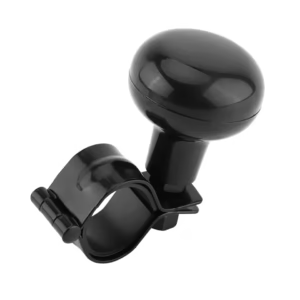
Steering Wheel Ball Spinner Knob – Black
The classic all-black steering ball with a smooth ball-bearing spin.
£14.99
View knob →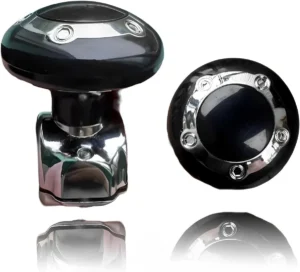
Chrome Steering Wheel Spinner Knob
Chrome-trimmed spinner knob with a metal clamp, in black or silver.
£14.99
View knob →✓ Free UK Royal Mail delivery · ✓ Dispatched within 3 working days · ✓ 14-day returns · ✓ 1-year warranty
Frequently Asked Questions
How long after a stroke can I drive in the UK?
GOV.UK guidance for car and motorcycle licences says you must stop driving for at least 1 month after a stroke, and only restart when your doctor or healthcare professional says it is safe. You must tell the DVLA if problems such as weakness in your arms or legs or eyesight problems are still there after 1 month. Read the official stroke and driving guidance.
Can I use a steering wheel knob after a stroke?
Yes, a steering wheel knob is legal to use, and many drivers with weakness on one side find it helps. If the DVLA is involved in your case, it may ask for a driving assessment so the right adaptations can be recommended. See do you need a driving assessment to use a steering wheel knob.
References
[1] Stroke Association. Driving after a stroke. Available at: https://www.stroke.org.uk/stroke/life-after/driving
[2] Steering Wheel Knob. Steering Wheel Spinner Knobs for Disabled Drivers in the UK (Complete 2026 Guide). Available at: https://steeringwheelknob.co.uk/steering-wheel-spinner-knobs-for-disabled-drivers-in-the-uk-complete-2026-guide/
