
Steering wheel spinner knobs, often seen on forklifts and agricultural machinery, offer enhanced manoeuvrability, particularly at low speeds. For drivers of vans and commercial vehicles in the UK, understanding the specific legalities surrounding these devices is crucial. This article delves into the regulations, MOT requirements, and other considerations for using spinner knobs in a professional driving context, ensuring compliance with UK law and maintaining road safety.
The Legality of Steering Wheel Spinner Knobs in the UK
General Overview
In the United Kingdom, the use of steering wheel spinner knobs is generally permitted, provided they do not compromise the safe operation or control of the vehicle. There is no blanket ban on these devices. The primary concern for regulatory bodies like the Driver and Vehicle Licensing Agency (DVLA) and the Driver and Vehicle Standards Agency (DVSA) is road safety and the driver’s ability to maintain full control of their vehicle at all times. As such, a securely fitted spinner knob that does not interfere with the steering mechanism or other controls is typically deemed acceptable.
Specifics for Vans and Commercial Vehicles
For vans and commercial vehicles, including Light Goods Vehicles (LGVs) and Heavy Goods Vehicles (HGVs), the same general principles apply. The key differentiator often lies in the professional context of their use and the potential for employer policies to impose stricter rules. While the law itself does not prohibit them, employers operating fleet vehicles may have internal policies against their use due to perceived safety risks, insurance implications, or standardisation within their fleet. Drivers should always consult their employer’s guidelines before fitting such a device.
Steering Wheel Spinner Knobs and the MOT Test (Class 7)
The MOT (Ministry of Transport) test is a critical annual inspection to ensure vehicles meet roadworthiness standards. For vans and commercial vehicles up to 3,500kg, a Class 7 MOT is required. The question often arises: will a steering wheel spinner knob cause an MOT failure?
What the MOT Inspects
The DVSA MOT inspection manual outlines specific criteria for various vehicle components. Regarding steering, the inspection focuses on the function and security of the steering system itself, rather than accessories clamped to the rim. Key areas inspected include:
- Steering wheel security: Ensuring the wheel is firmly attached and has no excessive play.
- Steering wheel condition: Checking for cracks, breaks, or deformations that could impair safe control.
- Steering column: Verifying it is secure, free from excessive wear, and operating correctly.
- Steering lock: Confirming it operates without jamming.
Crucially, the MOT test does not specifically inspect for the presence of accessories like spinner knobs. Therefore, a properly installed spinner knob, which is secure and does not obstruct the steering mechanism or any controls, will not, on its own, lead to an MOT failure.
Deficiency Categories
Since May 2018, MOT deficiencies are categorised as Minor, Major, or Dangerous. For a spinner knob to be flagged, it would need to fall under a broader steering system inspection criterion:
- No deficiency: A secure, properly installed spinner knob.
- Minor (advisory): A loose spinner knob that moves freely on the rim, potentially affecting steering control. This is at the tester’s discretion.
- Major (fail): A spinner knob that physically obstructs the steering mechanism or prevents full lock-to-lock rotation, impairing the steering system’s function. This would indicate a seriously incorrect installation.
Is it a “Modification”?
There is often confusion about whether a spinner knob constitutes a “modification” for MOT purposes. The MOT test does not have a general “modifications” category. It inspects specific systems and components against defined standards. A steering wheel spinner knob is considered a removable accessory, not a structural, mechanical, or electrical modification. It is comparable to a phone mount or a seat cushion and does not fall within any testable system or component.
Employer Policies and Fleet Vehicles
While legal from a regulatory standpoint, the use of steering wheel spinner knobs in commercial settings is often subject to employer policies. Many companies operating fleets of vans or HGVs implement strict rules regarding vehicle modifications and accessories to ensure consistency, minimise risk, and comply with their insurance agreements. Employers may view spinner knobs as a potential distraction or a device that could interfere with the safe operation of the vehicle, especially in emergency situations. Drivers of commercial vehicles should always consult their company’s vehicle use policy or fleet manager before installing a spinner knob to avoid disciplinary action or invalidating company insurance.
Road Traffic Act and Construction & Use Regulations
The overarching legal framework governing vehicle use in the UK includes the Road Traffic Act and the Road Vehicles (Construction and Use) Regulations 1986. These regulations are designed to ensure vehicles are safe and properly maintained.
- Regulation 29 requires steering gear to be maintained in good and efficient working order. A securely fitted spinner knob does not affect the working order or adjustment of the steering gear.
- Regulation 100 stipulates that no vehicle shall be used on the road in such a condition that its use involves a danger of injury to any person. A properly installed spinner knob on a power-steering-equipped vehicle is not considered to create a danger of injury.
- Regulation 104 covers the requirement to maintain steering gear. Again, a removable accessory on the wheel rim is not considered part of the steering gear itself.
Therefore, a spinner knob, when used responsibly and fitted correctly, typically complies with these regulations.
Disability Adaptations
An important distinction must be made for steering wheel spinner knobs used as prescribed disability aids. For drivers with certain physical limitations, these devices are essential for safe and effective vehicle control. If a spinner knob has been recommended or prescribed by a Driving Mobility assessment centre or an occupational therapist, it is considered a legitimate adaptation.
- Prescribed aids and MOT: Vehicles with prescribed steering aids are routinely tested and pass MOTs without issue. The vehicle should be presented for the MOT in the condition it is normally driven, meaning the spinner knob should remain fitted.
- DVSA guidance: The DVSA recognises adapted vehicles, and MOT testers are familiar with various adaptations, including spinner knobs. Refusing to test a vehicle or failing it without a valid inspection criterion due to a prescribed aid could constitute discrimination under the Equality Act 2010.
Shop UK steering wheel knobs
Clamp-on spinner knobs that fit steering wheel rims about 28–40mm thick. No drilling, removable in minutes.
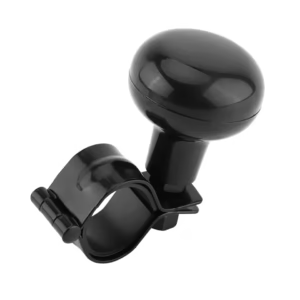
Steering Wheel Ball Spinner Knob – Black
The classic all-black steering ball with a smooth ball-bearing spin.
£14.99
View knob →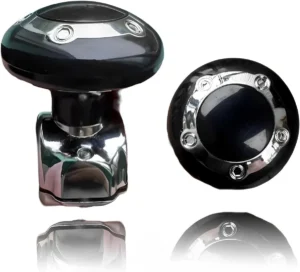
Chrome Steering Wheel Spinner Knob
Chrome-trimmed spinner knob with a metal clamp, in black or silver.
£14.99
View knob →✓ Free UK Royal Mail delivery · ✓ Dispatched within 3 working days · ✓ 14-day returns · ✓ 1-year warranty
Conclusion
In summary, steering wheel spinner knobs are generally legal for vans and commercial vehicles in the UK, provided they are securely fitted and do not impede the safe operation of the vehicle. They are not a specific MOT test item, and a properly installed knob will not cause a failure. However, drivers must be mindful of employer policies, which may restrict their use of fleet vehicles. For those using spinner knobs as prescribed disability aids, the legal framework and MOT procedures are accommodating, recognising their importance for inclusive mobility. Always ensure your spinner knob is fitted correctly and maintained to uphold road safety standards and comply with all relevant UK regulations.
