Short answer: a padded spinner knob fitted correctly is unlikely to harm your wheel. But a cheap unpadded clamp, screwed on too tight, can absolutely leave marks — especially on soft leather rims. And if your car has a heated steering wheel, there is one risk worth taking seriously: the clamp can damage the heating element beneath the trim.
Damage from a spinner knob is almost always preventable rather than inevitable. It comes down to padding, placement, and a little ongoing attention.
How a Clamp Can Mark a Wheel
Most spinner knobs attach with a metal clamp that squeezes the wheel rim. That concentrated pressure is the whole issue. A wheel rim is not a solid bar — it is a steel or alloy core wrapped in foam and covered in leather, synthetic leather, or plastic. Squeezing anything around it presses hard into that covering.
When the damage happens, it tends to take one of three forms:
- Pressure dents — a visible groove in the rim where the clamp has compressed the foam or leather beneath the surface.
- Surface scuffs — small abrasions in the leather’s finish where bare metal, or a rough clamp edge, has rubbed against it during fitting.
- Cracking — on older or sun-worn leather, clamping pressure in one spot can split an already fragile surface.
The single biggest factor is whether there is padding between the clamp and the wheel. A rubber or foam pad spreads the clamping force over a wider area, which greatly reduces the risk of a dent. An unpadded metal clamp biting directly into the wheel is the configuration drivers most often blame when marks appear — as one UK driver put it on a motoring forum, fitting the knob “often damages the steering wheel rim”, which is exactly why cheap knobs get a bad name for this.
The second biggest factor is tightness. The clamp only needs to be tight enough that the knob does not shift when you push it sideways. Beyond that, every extra turn of the screw adds pressure to the wheel and no extra safety.
Leather Wheels Mark More Easily Than You Might Expect
Leather steering wheels are relatively soft — softer than the leather on most car seats. Drivers on detailing and owners’ forums regularly report scratches and pressure marks on wheels from nothing more aggressive than rings, keys, or fingernails. Even carmakers have issued technical guidance noting that leather wheels are prone to pressure points from everyday objects.
A clamp concentrates far more force into one spot than a ring ever would, so treat leather with respect during fitting. Many drivers use knobs on leather rims without trouble — but the rubber pad is non-negotiable, and over-tightening is the mistake to avoid.
Wheels with stitched seams or perforated leather sections deserve extra care: avoid clamping directly over a seam or a perforated patch, since seams are weaker points and perforations give the leather less structure to resist pressure. A smooth, plain stretch of rim is the safest spot.
Heated Steering Wheels: The One Risk to Take Seriously
Heated steering wheels contain thin heating elements — essentially fine wiring mats — laminated into the rim under the trim. A clamp pressing hard into the rim can crush or break one of these elements.
This is not a theoretical concern. Drivers discussing spinner knobs on UK forums flag it explicitly: if you have a heated wheel, a clamp may well damage the heating element, and a broken element is an expensive, fiddly repair — often a whole-wheel job rather than something that can be patched.
Practical advice:
- Test your heated wheel before fitting. Switch it on and make sure the whole rim warms up evenly, so you know the baseline.
- If your wheel is heated, think hard about whether a clamp knob is right for it. This is the one case where the honest answer may be “don’t fit one” — or at least to talk to your dealer first.
- If you do fit one on a heated wheel, check the heating again afterwards and periodically through winter. If a section stops warming, remove the knob and have the element checked.
Fitting Without Damage: Padding, Placement, and Torque
The fitting guide matters more for damage prevention than anything else. The essentials:
- Use the supplied rubber pad. Every decent knob ships with one. Place it between the clamp and the wheel, and trim it to size if it is oversized. If your knob did not come with a pad, add a strip of rubber or dense foam before fitting — never clamp bare metal to the wheel.
- Clean the rim first. Wipe the fitting spot with a damp cloth so grit is not trapped under the pad, where it could act like sandpaper.
- Pick the right position. Fit the knob on a plain, smooth stretch of rim, away from seams, stitching, perforations, spokes, and control buttons. Check that it clears the indicator and wiper stalks as the wheel turns.
- Tighten to “does not shift”, not “as hard as possible”. Fit the clamp, give the knob a firm sideways push — if it does not slide, it is tight enough. One driver with long-term experience recommends double-checking tightness because road vibration can loosen the grip over time.
- Test before driving. With the car stationary, spin the knob through a full turn of the wheel to confirm nothing binds, slips, or catches.
For the full walkthrough, see our step-by-step guide to fitting a steering wheel spinner knob.
A Quick Monthly Check-Up
A knob left alone for months is how minor issues become permanent marks. Once a month, spend two minutes on this:
- Re-check tightness. Vibration can loosen the clamp slightly; re-tighten gently if it has shifted — but again, no further than needed.
- Lift the pad and look underneath. Check for dents, scuffs, or discolouration forming on the wheel. Catching a pressure mark early means you can relieve it before it sets.
- Consider rotating the position. Moving the knob to a fresh spot on the rim every few months spreads the load so no single section carries pressure indefinitely.
- Re-test the heated wheel (if applicable) when you first need it each autumn.
This is also a good moment to revisit the broader picture — our spinner knob safety myths vs facts covers the other objections drivers raise.
Already Got Marks? What May Help
If a previous knob — or a badly fitted one — has left its mark, all is not necessarily lost:
- Shallow pressure dents: gentle warmth can help leather relax back. A warm (not hot), damp cloth pressed over the dent for a few minutes, then left to dry naturally, has helped some drivers soften indentations. Keep the heat mild — excessive heat damages leather.
- Surface scuffs: a quality leather cleaner followed by conditioner can make light scuffs far less visible. It will not fix deep cuts, but surface marks often respond well.
- Deep gouges or cracked leather: this is upholstery-repair territory for a trim specialist.
Key Takeaways
- A padded knob, fitted at sensible tightness, is unlikely to damage a steering wheel — but unpadded clamps and over-tightening can leave dents and scuffs, especially on leather.
- Always use the supplied rubber pad (or add your own), never clamp bare metal to the rim.
- Avoid seams, stitching, and perforated sections; fit on a plain stretch of rim.
- Tighten only until the knob cannot slide — tighter adds no safety, only pressure.
- Check monthly: tightness, the wheel surface under the pad, and consider rotating position.
- Heated steering wheels need extra caution — a clamp can damage the heating element. Test heating before and after fitting, and consider whether a clamp knob is right for a heated wheel at all.
Both knobs we sell ship with protective clamp padding and are designed to fit snugly without excessive force: the Premium Ball Spinner Knob – Black and the Chrome Spinner Knob – Black / Silver.
Shop UK steering wheel knobs
Clamp-on spinner knobs that fit steering wheel rims about 28–40mm thick. No drilling, removable in minutes.
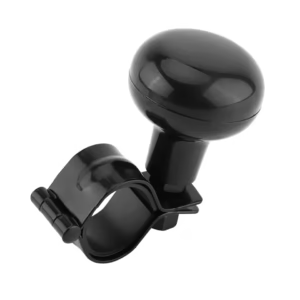
Steering Wheel Ball Spinner Knob – Black
The classic all-black steering ball with a smooth ball-bearing spin.
£14.99
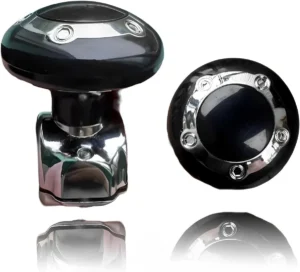
Chrome Steering Wheel Spinner Knob
Chrome-trimmed spinner knob with a metal clamp, in black or silver.
£14.99
✓ Free UK Royal Mail delivery · ✓ Dispatched within 3 working days · ✓ 14-day returns · ✓ 1-year warranty
Quick Answers
Will a spinner knob mark my leather steering wheel?
It can if fitted badly — unpadded clamps and over-tightening are the usual causes. With the rubber pad in place and sensible tightness, marks are unlikely.
Can I use a knob on a heated steering wheel?
It carries a real risk: clamp pressure can damage the thin heating element in the rim. Test your heating before and after fitting, and treat this as a genuine trade-off rather than a non-issue.
How tight should the clamp be?
Tight enough that the knob does not shift when pushed sideways — no tighter.
How often should I check the fitting?
Monthly is a sensible routine: check tightness, inspect the wheel under the pad, and consider moving the knob to a fresh position.
