
For many drivers in the UK, steering wheel knobs – often referred to as ‘spinner knobs’ or ‘brodie knobs’ – offer enhanced control, particularly for those with mobility challenges or when performing specific manoeuvres. However, their presence on a vehicle often raises questions about legality and, crucially, their impact on a vehicle’s annual MOT test. From an MOT tester’s perspective, the focus isn’t solely on the knob itself, but rather on its implications for the steering system’s integrity, safety, and compliance with DVSA (Driver and Vehicle Standards Agency) guidelines. This article delves into what MOT testers actually check, referencing the official DVSA manual, and explores the real-world outcomes for vehicles fitted with these devices.
The Legality of Steering Wheel Knobs in the UK
There’s a common misconception that steering wheel knobs are inherently illegal in the UK. This is largely a ‘wives’ tale’ that needs clarification. The truth is more nuanced, and understanding it is key to ensuring your vehicle remains compliant.
Are Steering Wheel Knobs Illegal?
No, steering wheel knobs are not explicitly illegal in the UK. Neither the DVLA (Driver and Vehicle Licensing Agency) nor the DVSA prohibits their use outright. They are often considered an adaptation, particularly beneficial for drivers with disabilities, allowing for easier one-handed steering and improved control during low-speed manoeuvres, such as parking.
When are they permitted?
Steering wheel knobs are generally permitted, provided they do not compromise the safe operation of the vehicle or damage the steering wheel. While they are frequently used as aids for disabled drivers, their use is not exclusively restricted to this group. The critical factor for an MOT tester is not the presence of the knob, but its effect on the vehicle’s roadworthiness.
The MOT Tester’s Focus: What Really Matters
When a vehicle undergoes an MOT test, the examiner follows stringent guidelines outlined in the DVSA MOT inspection manual. For steering wheel knobs, the inspection isn’t about the accessory itself, but how it interacts with the vehicle’s primary steering components and overall safety.
Steering Wheel Condition: The Primary Concern
The most significant area of concern for an MOT tester regarding a steering wheel knob is the condition of the steering wheel to which it is attached. The DVSA manual places a strong emphasis on the structural integrity and safe operation of the steering wheel. Any damage caused by the fitting or use of a steering wheel knob could lead to a failure.
Testers will look for:
- Damage to the rim: Cracks, splits, or excessive wear on the steering wheel rim, particularly around the knob clamp, can compromise the wheel’s structural integrity. This is a common issue that can arise from poorly designed or overtightened clamps.
- Security of attachment: The knob must be securely fitted and not interfere with the normal operation of the steering wheel or other controls.
- Sharp edges or protrusions: Any part of the knob or its fitting mechanism that creates a sharp edge or excessive protrusion could pose a safety risk in the event of a collision or even during normal driving, potentially causing injury to the driver.
DVSA MOT Manual: Section 2. Steering
The relevant section of the DVSA MOT inspection manual for private passenger and light commercial vehicles is Section 2: Steering. While the manual does not specifically mention ‘steering wheel knobs’, it details the requirements for the steering wheel and column. Key points that a tester will consider include:
- Condition of the steering wheel: The manual states that the steering wheel must be in a satisfactory condition, free from excessive cracks, distortion, or damage that could affect its strength or the driver’s grip. Damage caused by a steering wheel knob, such as a cracked rim, would fall under this criterion.
- Security of the steering wheel: The steering wheel must be securely attached to the steering column. While a knob itself typically doesn’t affect this, any modification that compromises the wheel’s attachment would constitute a serious defect.
- Free play: Testers check for excessive free play in the steering system. While a knob doesn’t directly cause free play, if its presence leads the driver to exert undue force or adopt an unusual grip that masks underlying steering issues, it could indirectly contribute to a failure.
It’s important to note that a steering wheel knob, as an additional item, is not a testable item in itself. However, if its presence causes a defect in a testable item (like the steering wheel’s condition), then that defect will be assessed against the manual’s standards.
Protrusion and Safety
Beyond structural damage, testers also consider the safety implications of any modification. An overly large or awkwardly positioned steering wheel knob could be deemed a safety hazard if it:
- Impairs control: Prevents the driver from maintaining proper control of the vehicle, especially during emergency manoeuvres.
- Causes snagging: Catches on clothing or other items, distracting the driver or impeding steering.
- Poses an injury risk: Has sharp edges or breaks off easily, potentially causing injury in a collision.
Common Issues Leading to MOT Failure
Based on real-world outcomes and tester experiences, several common issues related to steering wheel knobs can lead to an MOT failure.
Damage to the Steering Wheel Rim
This is by far the most frequent reason for concern. Many steering wheel knobs are clamped onto the rim. If the clamp is too tight, poorly designed, or made of unsuitable material, it can:
- Crush the rim: Leading to structural weakness.
- Cause cracks: Especially in older or plastic steering wheels.
- Wear away material: Creating sharp edges or an uneven surface.
Any significant damage to the steering wheel rim that compromises its integrity or presents a hazard will result in an MOT failure. Testers are trained to identify such defects as they directly impact the driver’s ability to safely control the vehicle.
Impaired Control and Safety
While less common, a steering wheel knob could contribute to an MOT failure if it demonstrably impairs the driver’s ability to control the vehicle. For instance, if the knob is so large or positioned in such a way that it obstructs the driver’s hands from gripping the wheel properly, or interferes with other controls (like indicators or wipers), a tester might deem it a safety risk.
Poorly Fitted or Modified Knobs
A knob that is loose, wobbly, or has been poorly fitted can also be problematic. A loose knob could detach during driving, leading to a loss of control. Similarly, any DIY modifications to the steering wheel or the knob’s attachment that are not secure or create new hazards would be scrutinised by an MOT tester.
Best Practices for Steering Wheel Knob Users
To avoid potential MOT issues and ensure safety, drivers using or considering a steering wheel knob should adhere to best practices.
Choosing a Suitable Knob
- Quality over cost: Invest in a high-quality steering wheel knob designed for automotive use. Cheap, poorly constructed knobs are more likely to cause damage or fail.
- Ergonomics and safety: Choose a knob that is comfortable to use, has no sharp edges, and is designed to minimise protrusion.
- Non-damaging clamps: Look for designs that use rubber inserts or padded clamps to protect the steering wheel rim.
Professional Installation
While many knobs are designed for DIY fitting, professional installation can ensure it is securely attached without overtightening or causing damage. If you are unsure, consult a qualified mechanic or an adaptation specialist.
Regular Inspection
Before your MOT, and periodically throughout the year, inspect your steering wheel and the knob’s attachment point. Check for:
- Any signs of cracking, crushing, or wear on the steering wheel rim.
- The knob’s security – ensure it’s not loose or wobbly.
- Any sharp edges developing on the knob or its fitting.
Addressing these issues proactively can prevent an unexpected MOT failure and, more importantly, ensure your continued safety on the road.
Shop UK steering wheel knobs
Clamp-on spinner knobs that fit steering wheel rims about 28–40mm thick. No drilling, removable in minutes.
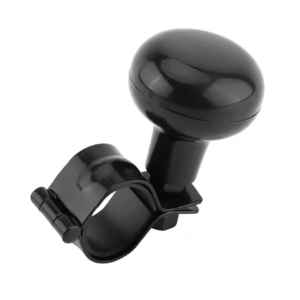
Steering Wheel Ball Spinner Knob – Black
The classic all-black steering ball with a smooth ball-bearing spin.
£14.99
View knob →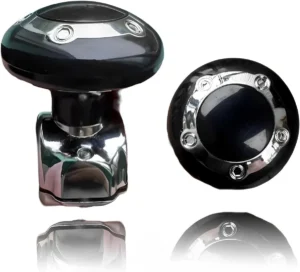
Chrome Steering Wheel Spinner Knob
Chrome-trimmed spinner knob with a metal clamp, in black or silver.
£14.99
View knob →✓ Free UK Royal Mail delivery · ✓ Dispatched within 3 working days · ✓ 14-day returns · ✓ 1-year warranty
Conclusion
Steering wheel knobs are not illegal in the UK, nor are they a directly testable item in the MOT. However, their presence necessitates careful consideration of the steering wheel’s condition and overall safety. From an MOT tester’s perspective, the critical assessment centres on whether the knob has damaged the steering wheel rim, created unsafe protrusions, or compromised the driver’s ability to maintain proper control. By choosing a high-quality knob, ensuring professional fitting, and conducting regular inspections, drivers can enjoy the benefits of these aids while confidently navigating the MOT test and adhering to UK road safety standards.
