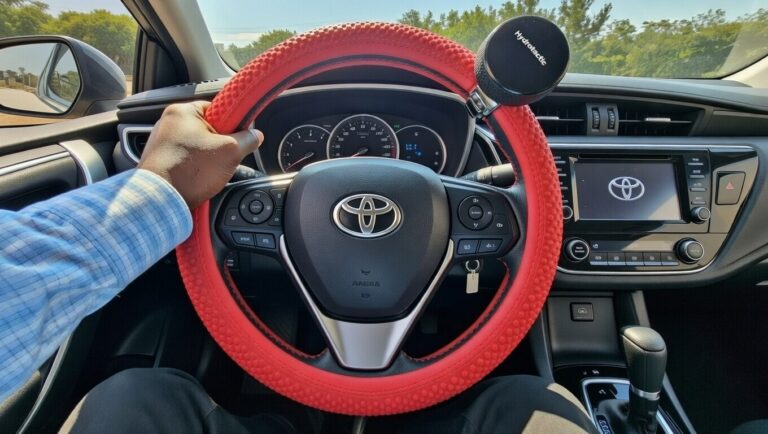
How to Fit a Steering Wheel Spinner Knob (Step-by-Step Guide)
How to Fit a Steering Wheel Spinner Knob: Step-by-Step Guide
Fitting a steering wheel spinner knob takes less than five minutes with the right approach. Get it wrong, though, and you’ll end up with a knob that slips under load, scratches your steering wheel, or comes loose while driving.
This guide covers every common fitting type — clamp-on, adhesive, and bolt-through — with step-by-step instructions, the tools you’ll need, and fixes for the problems people actually run into.
If you’re not sure what a spinner knob is or why drivers use them, start with our guide: What Is a Steering Wheel Spinner Knob?
What You’ll Need
Most steering wheel spinner knobs require no specialist tools. Here’s what to have ready before you start:
For clamp-on knobs (most common type):
- The spinner knob and its clamp assembly
- A clean, dry cloth
- Allen key or spanner (usually included — typically 4mm or 5mm Allen key)
- Rubbing alcohol or mild degreaser (to clean the wheel rim)
For adhesive-mount knobs:
- The spinner knob with an adhesive pad
- Rubbing alcohol or isopropyl alcohol
- A clean microfibre cloth
- Masking tape (optional, for positioning)
For bolt-through knobs (heavy-duty/commercial vehicles):
- The spinner knob and bolt hardware
- Drill with an appropriate bit (if pre-drilled holes aren’t present)
- Spanner or socket set
- Thread-locking compound (e.g., Loctite 243)
Optional but recommended for all types:
- A thin rubber or silicone grip pad (protects the steering wheel rim)
- A torque reference if your knob manufacturer specifies one
Step 1: Choose the Right Position on the Steering Wheel
Where you place the knob matters more than most people realise. The wrong position creates an uncomfortable grip angle or interferes with your ability to make full-lock turns.
Recommended position:
The most widely accepted position is between 10 o’clock and 11 o’clock on the steering wheel rim, or between 1 o’clock and 2 o’clock if you’re fitting it for left-hand use. This positioning is consistent with guidance from occupational therapy, driving assessments, and vehicle adaptation specialists in the UK.
Why this position works:
- Your wrist stays in a neutral angle during straight-line driving
- You maintain full steering lock without your hand colliding with your thigh or the dashboard
- It keeps the knob clear of the indicator and wiper stalks on most vehicles
Positions to avoid:
- 12 o’clock (top dead centre) — feels intuitive but forces an unnatural wrist angle during turns
- Below 9 o’clock or 3 o’clock — reduces your leverage and control
- Anywhere that blocks your view of the instrument cluster
If you’ve been prescribed a spinner knob through a driving assessment centre, your assessment report will specify the exact clock position. Follow that recommendation — it was determined based on your individual range of motion. The Forum of Mobility Centres can provide further guidance.
Sit in the driving seat and test the position before you commit. Hold the knob loosely against the wheel rim and simulate turning movements. Check for clearance at full lock in both directions.
Step 2: Prepare the Steering Wheel Surface
This step is where most failed installations start. A dirty, greasy, or conditioned steering wheel surface will cause the knob to slip — regardless of fitting type.
Cleaning process:
- Dampen a clean cloth with rubbing alcohol or isopropyl alcohol
- Wipe the section of the steering wheel rim where you plan to fit the knob
- Clean approximately 10cm on either side of the fitting point as well
- Allow to dry completely — this takes around 30 seconds
Why this matters:
Steering wheels accumulate oils from your hands, residue from leather conditioners, and surface contaminants, creating a slippery barrier. Even a new steering wheel may have a factory-applied coating that reduces grip.
For leather steering wheels specifically:
Leather conditioners and protectants are the number one cause of spinner knobs slipping. If you’ve recently treated your steering wheel, clean the fitting area thoroughly. The alcohol won’t damage the leather in this small area, and the knob will cover it anyway.
Step 3: Fit the Knob (By Type)
How to Fit a Clamp-On Steering Wheel Spinner Knob
Clamp-on knobs are the most common type. They use a C-shaped or U-shaped clamp that tightens around the steering wheel rim with one or two bolts.
Instructions:
- Open the clamp fully. Loosen the Allen bolt or screw until the clamp gap is wide enough to slide over your steering wheel rim. Don’t remove the bolt entirely — just back it off.
- Position a protective pad if using one. Place a thin rubber or silicone pad around the steering wheel rim at your chosen position. This prevents the metal clamp from marking or denting the wheel. Some knobs include a rubber liner inside the clamp — check before adding your own.
- Slide the clamp over the steering wheel rim. The clamp should sit perpendicular to the rim, with the knob head sitting on the outer face of the wheel (facing you).
- Hand-tighten the bolt. Snug the Allen bolt or screw down with your fingers first. This lets you make final position adjustments.
- Check the angle. The knob head should spin freely on its bearing (if it has one). The shaft of the knob should point roughly towards you when seated in the driving position — not angled up, down, or sideways.
- Tighten firmly with the Allen key or spanner. Apply firm pressure. The clamp should grip the steering wheel rim tightly enough that you cannot rotate or slide the knob by hand. There should be zero movement.
- Test under load. With the vehicle stationary and the engine running (so power steering is active), make several full-lock turns in both directions. The knob must not shift position. If it moves at all, tighten further or add a grip pad.
How to Fit an Adhesive-Mount Steering Wheel Spinner Knob
Adhesive-mount knobs use a strong bonding pad (usually 3M VHB tape or similar) instead of a mechanical clamp. These are less common and generally suited to flat-rimmed or unusually shaped steering wheels where a clamp won’t grip.
Instructions:
- Clean the surface thoroughly using rubbing alcohol as described in Step 2. Adhesive mounts are entirely dependent on surface preparation. This is not optional.
- Warm the adhesive pad slightly. If the ambient temperature is below 15°C, warm the adhesive side of the mount with a hairdryer for 10–15 seconds. Adhesive bonding strength drops significantly in cold conditions. The 3M VHB technical data sheet confirms optimal application temperature is between 21°C and 38°C. Source: 3M VHB Tape Application Guide
- Peel the backing and position carefully. You get one chance. Press the base of the mount firmly onto the prepared surface.
- Apply sustained pressure for 30 seconds. Don’t just press and release. Firm, constant pressure activates the adhesive bond.
- Wait before use. Adhesive mounts reach approximately 50% of their bond strength within 20 minutes, but full cure takes up to 72 hours. Avoid heavy use for at least 24 hours if possible.
- Test before driving. Apply a firm rotational force to the knob by hand. It should not peel or shift.
⚠️ Adhesive mounts are generally less secure than clamp-on types. For regular daily driving, heavy vehicles, or any application where the knob is a primary steering control (particularly for disabled drivers), a mechanical clamp or bolt-through fitting is strongly recommended.
How to Fit a Bolt-Through Steering Wheel Spinner Knob
Bolt-through knobs are used primarily on commercial vehicles, forklifts, tractors, and agricultural machinery, where vibration and heavy steering loads would loosen a standard clamp.
Instructions:
- Determine whether your steering wheel has pre-drilled holes. Many commercial and agricultural vehicles come with mounting points for accessories. If yours does, match the bolt pattern to your knob’s mounting plate.
- If drilling is required: Mark the hole position precisely. Use a centre punch to prevent the drill bit from wandering. Drill through the steering wheel rim using the correct diameter bit for your mounting bolts. On any road-going vehicle, drilling into the steering wheel may compromise its structural integrity and could affect your MOT and insurance. Read our complete guide to steering wheel spinner knobs, UK law, MOT and insurance before proceeding.
- Bolt the mounting plate to the wheel. Insert bolts from the rear of the steering wheel rim through to the mounting plate on the front.
- Apply thread-locking compound. A medium-strength thread locker (such as Loctite 243) prevents bolts from loosening under vibration. Apply to bolt threads before final tightening.
- Tighten to the manufacturer’s specified torque if provided. Otherwise, tighten firmly — the mount should show absolutely zero play.
- Attach the knob head to the mounting plate per the manufacturer’s instructions. This usually involves a screw-on or pin connection.
Step 4: Post-Fitting Safety Checks
Once fitted, run through these checks before driving on a public road:
Immediate checks (stationary):
- The knob does not obstruct your view of the speedometer, fuel gauge, or warning lights
- The knob does not contact the indicator or wiper stalks at any steering wheel position
- The knob spins freely on its axis (if it has a bearing mechanism)
- The clamp/mount shows zero movement when you apply firm force in all directions
- Your hand can reach and grip the knob comfortably from your normal seated position
- You can still grip the steering wheel rim normally with both hands if needed
Dynamic checks (engine running, vehicle stationary):
- Turn the steering wheel to full lock in both directions — the knob should not collide with anything
- The knob remains firmly in position after several full rotations
- You can release and re-grip the knob smoothly during continuous turning
First drive checks (quiet road or car park):
- Practise low-speed manoeuvres: turning, reversing, three-point turns
- Test the emergency stop to confirm the knob doesn’t interfere with your steering control
- Check that vibrations at speed don’t cause any loosening
Fitting a Spinner Knob to a Leather Steering Wheel
This is one of the most common concerns, so it deserves its own section.
Will a clamp-on knob damage leather?
It can. Metal clamp jaws pressing against leather under tension will, over time, leave compression marks and potentially scuff the surface. This is cosmetic rather than structural, but it matters if you plan to remove the knob later or if the vehicle is leased.
How to prevent damage:
- Use a protective liner inside the clamp. A thin piece of rubber, a silicone sheet, or even a strip of bicycle inner tube between the clamp and the leather creates a buffer. Many quality spinner knobs include rubber clamp liners for this reason.
- Don’t over-tighten. Tighten enough to prevent movement, but no further. Check weekly for the first month and re-tighten if needed.
- Avoid knobs with serrated or knurled clamp faces. These are designed for bare metal or rubber-coated steering wheels and will chew into leather.
What about Alcantara or suede steering wheels?
Extra caution needed. These materials mark and compress more easily than smooth leather. A protective pad is essential, and adhesive-type mounts should be avoided entirely — the adhesive will damage the material on removal.
Fitting to Different Steering Wheel Rim Shapes
Not all steering wheels are round in cross-section. Here’s how to handle common variations:
Circular cross-section: Excellent — standard clamp fits perfectly. The most common car shape before 2015.
Oval/elliptical: Good — most clamps accommodate this. Ensure the clamp tightens on the narrower axis.
D-shaped / flat-bottomed: Varies — fit to the round portion onlyAvoid placing the knob on the flat section.
Thick/chunky rim: Check clamp maximum opening. Some clamps max out at 30mm diameter — measure first.
Thin rim (classic cars, tractors): Check clamp minimum closure. You may need packing material to fill the gap.
Heated steering wheel: Compatible with clamp-on typesAvoid drilling; do not damage heating elements
How to measure your steering wheel rim diameter:
Wrap a flexible tape measure or a piece of string around the circumference of the rim. Divide by 3.14 (π) to get the diameter. Most passenger car steering wheels have a rim diameter of 25-32mm. Most spinner knob clamps are adjustable within this range.
What Size Steering Wheel Knob Do I Need?
“Size” refers to two measurements: the knob head diameter and the clamp capacity.
Knob Head Size
SizeTypical DiameterBest ForSmall40–50mmCars, everyday driving, low-profile appearanceMedium50–65mmMost drivers, comfortable all-round gripLarge65–80mmDrivers with reduced grip strength, larger hands, or heavy-vehicle useExtra large / ball type80mm+Forklifts, tractors, specialist machinery
How to choose: If you can, hold the knob before purchasing. Your fingers should wrap around it comfortably without strain. Drivers with arthritis, reduced grip strength, or hand pain generally benefit from a larger diameter — a bigger knob requires less grip force to control.
Clamp Capacity
Check the product listing for the clamp’s minimum and maximum rim diameters. If your steering wheel rim is at the extreme end of the range, the clamp may not seat properly.
Common Problems and How to Fix Them
“My spinner knob keeps slipping”
Cause: Almost always surface contamination or insufficient clamping pressure.
Fix:
- Remove the knob
- Clean the steering wheel rim with rubbing alcohol
- Inspect the inside of the clamp — if it’s smooth metal, add a thin rubber pad
- Refit and tighten more firmly
- If it still slips, the clamp may be too large for your steering wheel rim. You need a packing shim or a different clamp size.
“The knob rattles or vibrates at speed”
Cause: Loose clamp bolt or worn bearing in the knob head.
Fix:
- Tighten the clamp bolt — it may have worked loose from vibration
- Apply a drop of medium-strength thread locker to the clamp bolt threads
- If the rattle is in the knob head itself, the internal bearing may be worn. Replace the knob.
“The knob is at an awkward angle”
Cause: The clamp is rotated on the rim, pointing the knob shaft in the wrong direction.
Fix: Loosen the clamp slightly, rotate the entire assembly until the knob points towards your normal seated chest position, and re-tighten.
“The clamp is marking my steering wheel”
Cause: Metal-to-surface contact under pressure.
Fix: Remove, add a rubber or silicone protective pad, and refit. For leather wheels, consider a purpose-made leather protector strip.
Safety and Legal Considerations
A spinner knob is a modification to your vehicle’s steering control. For the majority of drivers fitting a standard clamp-on knob, the legal and safety implications are minimal — but they do exist.
Key points:
- Standard clamp-on spinner knobs do not typically affect your MOT. The MOT test examines steering system function and condition. An accessory clamped to the rim that doesn’t interfere with steering operation is not normally grounds for failure. For full details, read our guide: Are Steering Wheel Spinner Knobs Legal in the UK?
- Your insurance company may consider it a modification. Whether you are obliged to disclose it depends on your policy terms and the specific question your insurer asks. We cover this in detail in our Steering Wheel Spinner Knobs: UK Law, MOT & Insurance – The Complete Guide.
- The knob must not interfere with airbag deployment. Do not fit any knob that requires modification to the steering wheel’s structure near the airbag module (the centre of the wheel).
- The knob must be secure. A loose knob that detaches while driving is a genuine hazard — both as a distraction and as a loss of your primary steering control method. Take the tightening and testing steps seriously.
When to Get a Professional Fitting
Most drivers can fit a clamp-on spinner knob in minutes with no assistance. However, professional fitting is recommended in the following situations:
- You’ve been prescribed a spinner knob as part of a DVLA driving assessment. The assessing centre may specify not just the clock position but the exact knob type and fitting method. Some mobility assessment centres will fit the knob during the assessment process. The Forum of Mobility Centres provides a directory of centres across the UK.
- You’re fitting a bolt-through type to a road-going vehicle. Drilling into a steering wheel has implications that most drivers shouldn’t take on without professional guidance.
- You’re fitting a vehicle with advanced steering wheel controls. Steering wheels with integrated paddle shifters, multifunction buttons, or capacitive touch sensors (used by lane-keeping assist systems) may not be compatible with all knob types. A professional installer can assess compatibility.
- You’re fitting adaptations to a Motability scheme vehicle. Modifications to Motability vehicles should be carried out or approved through the scheme’s adaptation process. Contact Motability Operations for guidance.
Frequently Asked Questions
Can I fit a steering wheel spinner knob myself? Yes. Clamp-on spinner knobs are designed for self-fitting and require no specialist tools. Most drivers complete the installation in under five minutes. Bolt-through types on road vehicles may benefit from professional fitting.
Will a spinner knob fit any steering wheel? Most clamp-on spinner knobs are universal and fit steering wheels with a rim diameter of 25-32mm, which covers the majority of passenger cars, vans, and light commercial vehicles. Always check the clamp’s minimum and maximum capacity against your steering wheel before purchasing.
Can I fit a spinner knob to a heated steering wheel? Yes, clamp-on types are compatible with heated steering wheels. The clamp sits on the outer rim and does not interfere with the internal heating element. Do not drill into a heated steering wheel.
How tight should a steering wheel spinner knob be? Tight enough that it cannot be moved, rotated, or slid along the rim by hand under firm pressure. If you can shift it at all, it’s not tight enough. After your first week of driving, re-check and tighten if any loosening has occurred.
Do I need to tell my insurance company I’ve fitted a spinner knob? This depends on your policy terms. Many insurers classify steering wheel knobs as minor accessories rather than performance modifications, but disclosure obligations vary. Our UK law, MOT and insurance guide covers this in full.
Can I fit a spinner knob to a flat-bottomed (D-shaped) steering wheel? Yes, but fit it to the rounded portion of the rim only. The flat section of a D-shaped wheel does not provide enough curvature for a clamp to grip securely.
Summary
Fitting a steering wheel spinner knob is a straightforward job for the vast majority of drivers. The process that matters most isn’t the mechanical fitting — it’s the preparation and positioning.
Get these three things right, and you’ll have no issues:
- Clean the steering wheel rim properly before fitting. Oils and conditioner residue cause slipping.
- Position the knob between 10 and 11 o’clock (or 1 to 2 o’clock for left-hand operation) unless a driving assessment specifies otherwise.
- Tighten until there is zero movement, then check again after your first week of use.
If you’re still choosing a knob, our guide to What Is a Steering Wheel Spinner Knob? explains the different types, materials, and what to look for. And if you have any concerns about legality or insurance, read our complete UK law, MOT and insurance guide before fitting.